QUERY_ RESULTS
Found 15 match(es) for "app development"
HARDWARE_STORE 4
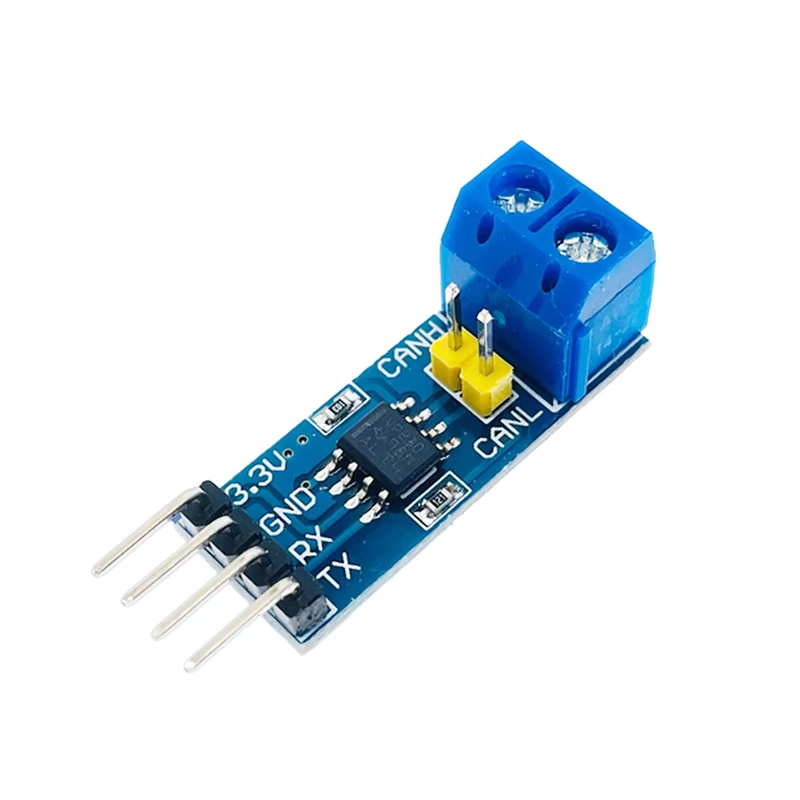
SN65HVD230 CAN Board Network Transceiver Evaluation Development Module
The SN65HVD230 CAN Board is a high-speed CAN (Controller Area Network) transceiver module designed to interface microcontrollers with CAN bus networks. Based on the Texas Instruments SN65HVD230 transceiver IC, the module operates at 3.3V and provides a reliable physical-layer interface for CAN communication in automotive, industrial automation, robotics, and IoT applications.
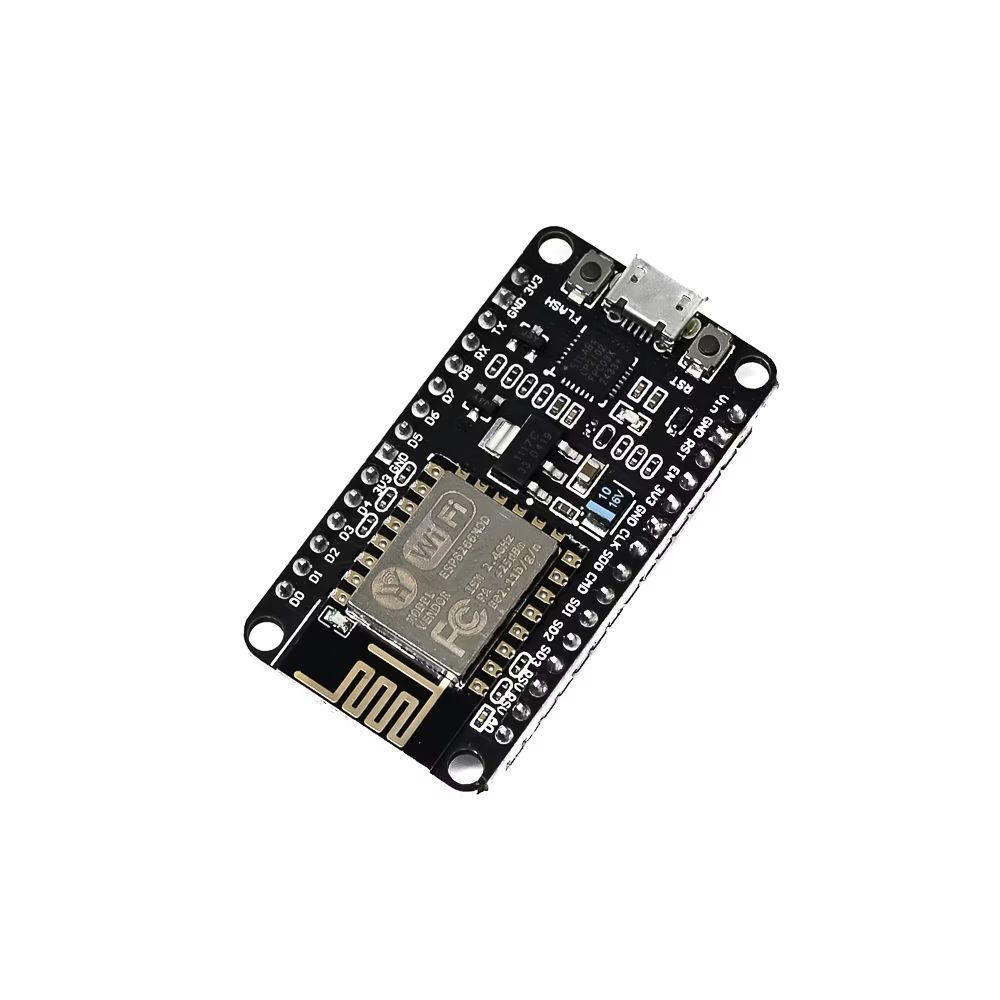
ESP8266 NodeMCU CP2102 Board
The ESP8266 NodeMCU CP2102 Development Board is a powerful Wi-Fi-enabled microcontroller board based on the ESP8266EX System-on-Chip (SoC). It combines a high-performance 32-bit processor with built-in IEEE 802.11 b/g/n Wi-Fi, making it an excellent platform for Internet of Things (IoT), home automation, wireless sensor networks, and embedded system applications.
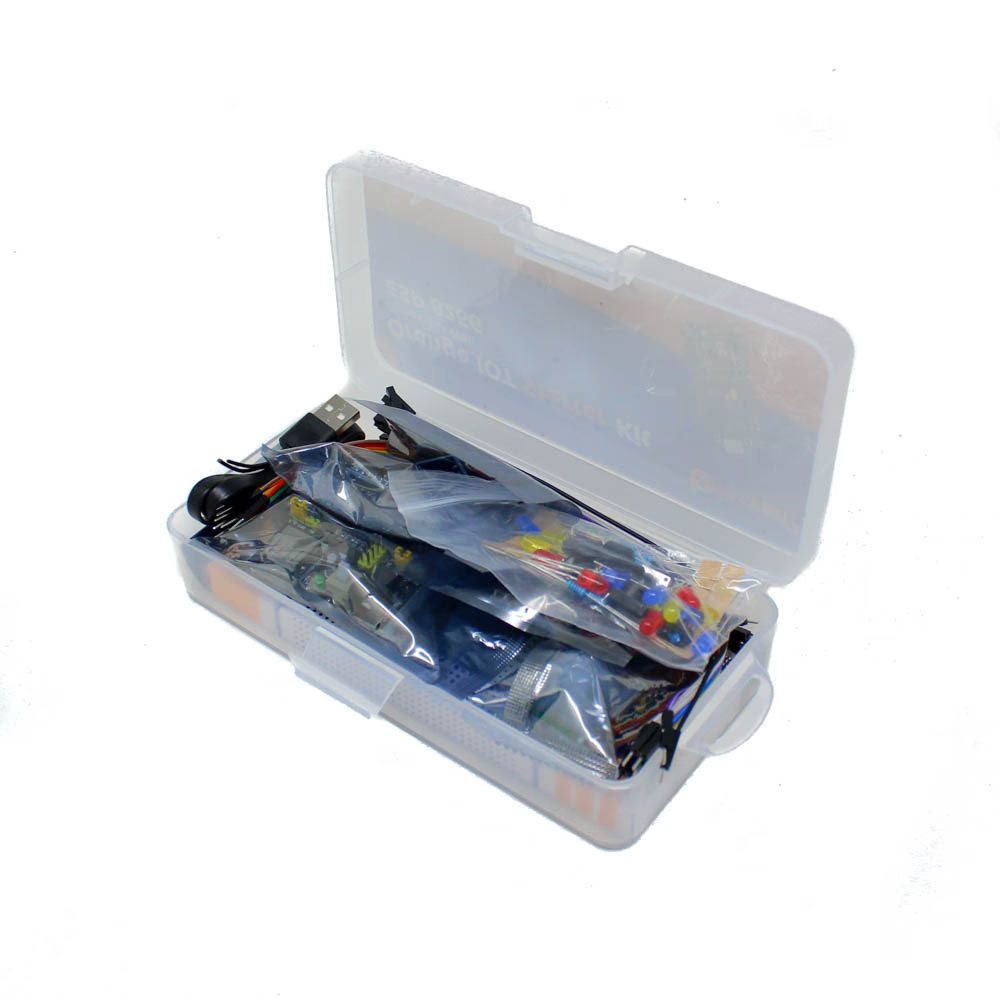
Cre8-Range ESP 8266 IoT Starter Kit
The ESP32-CAM is a development board that includes an ESP32-S processor, an OV2640 camera, several GPIOs for connecting peripherals, and a microSD card slot for storing images when communication is unavailable. The ESP32-CAM module is becoming so popular in applications requiring image broadcasting, facial recognition, image processing, and, most importantly, built-in WiFi and Bluetooth. The ESP32 chip has enough processing power to process images.
Best Prices, FPGA Development Boards ALTERA FPGA Cyclone II EP2C5T144 System Development Board
Get ALTERA FPGA Cyclone II EP2C5T144 System Development Board. Using ALTERA company’s Cyclone II EP2C5T144 chip as the core of the smallest system, the FPGA easily embedded in the actual application system. Complete from simple logic control, data acquisition, signal processing, mathematical calculations and other functions; All the pins of the core board FPGA chip are all led out, and the board can be directly inserted into the application board. The 5V power supply board on the board can be introduced through the socket and can also be introduced through the pin header.
SCHEMATICS 11

Fury Fly- India's Smallest Drone
Every engineering project starts with a small idea. Some ideas remain on paper, while others slowly become reality. Fury Fly is one of those ideas that I decided to turn into something real. Fury Fly is an ambitious project focused on building one of India's smallest custom-designed drones. The drone is still under development, and there's a long journey ahead before its first successful flight. Instead of waiting until everything is finished, I wanted to share the complete development process—the good moments, the failures, and everything in between. When I first planned Fury Fly, I thought making a tiny drone would actually be easier than building a larger one. I couldn't have been more wrong. The smaller the drone becomes, the harder every decision gets. Space becomes extremely limited, weight becomes critical, and even a few extra grams can affect flight performance. Every wire, screw, connector, and electronic component has to be carefully selected. I've spent countless hours researching motors, batteries, flight controllers, ESCs, receivers, and propellers. Most of my time wasn't spent building—it was spent learning. One of the biggest challenges has been designing a frame that is both lightweight and strong enough to survive crashes. Every redesign teaches me something new about engineering and manufacturing. Like every student project, things haven't always gone according to plan. Components arrived late, some parts were incompatible, and a few designs looked perfect on the computer but failed in real life. Although frustrating at first, these setbacks have become some of the best learning experiences. For me, Fury Fly is much more than just another drone project. It's helping me understand embedded systems, PCB layouts, aerodynamics, battery management, wireless communication, 3D design, firmware configuration, and mechanical design—all in one project. I'm documenting the entire process so other students can learn from both my successes and my mistakes. Planned Specifications Note: These specifications are the current design targets and may change as development continues. Specification Planned Value Project Name Fury Fly Category Nano Drone Country India Status Under Development Drone Type Custom Built Flight Controller ESP S3 XIAO Frame Material Carbon Fiber / 3D Printed Prototype Propeller Size 31–40 mm (Estimated) Motor Type Coreless / Brushless (Under Testing) Battery 1S Li-Po Estimated Flight Time 4–7 Minutes Control Range 50–100 m (Target) Camera No (Initial Prototype) Weight Goal Under 30 g Assembly DIY Planned Components Component Purpose Flight Controller Controls drone stability Motors Generate lift Propellers Produce thrust Li-Po Battery Power supply Receiver Wireless communication Frame Holds all components Charger Battery charging Transmitter Manual control Screws & Mounts Assembly Connectors & Wiring Electrical connection Estimated Budget Item Estimated Cost (₹) Flight Controller 1,100 Motors (4x) 900 Propellers 150 Li-Po Battery 500 Receiver 800 Radio Transmitter 4,000 Frame Material 700 Charger 700 Connectors & Wires 250 Miscellaneous 1,200 Estimated Total ₹10,300 What I've Learned So Far One thing I've learned during this project is that engineering isn't just about assembling parts together. It's about solving problems that you never expected to face. Sometimes you spend hours trying to fix something that turns out to be a loose connector. Sometimes an entire design has to be changed because one component is just a few millimeters too large. Those moments can be frustrating, but they're also where most of the learning happens. Every redesign makes the project better. Every mistake teaches something new. And every small milestone makes the final goal feel a little closer. What's Next? The next phase of Fury Fly focuses on completing the frame design, integrating all electronic components, configuring the flight controller, and preparing for the first flight tests. There will almost certainly be crashes, broken propellers, firmware issues, and several redesigns before the drone flies the way I imagine. But that's exactly what makes building something from scratch so rewarding. This isn't just about creating a tiny drone. It's about learning, improving, and showing that student projects can become something meaningful with enough patience and dedication. Thank you to everyone following the Fury Fly journey. More updates, testing videos, design improvements, and development logs will be shared as the project continues to evolve. The first flight may still be ahead—but every small step is bringing Fury Fly closer to the sky.
Dephyr
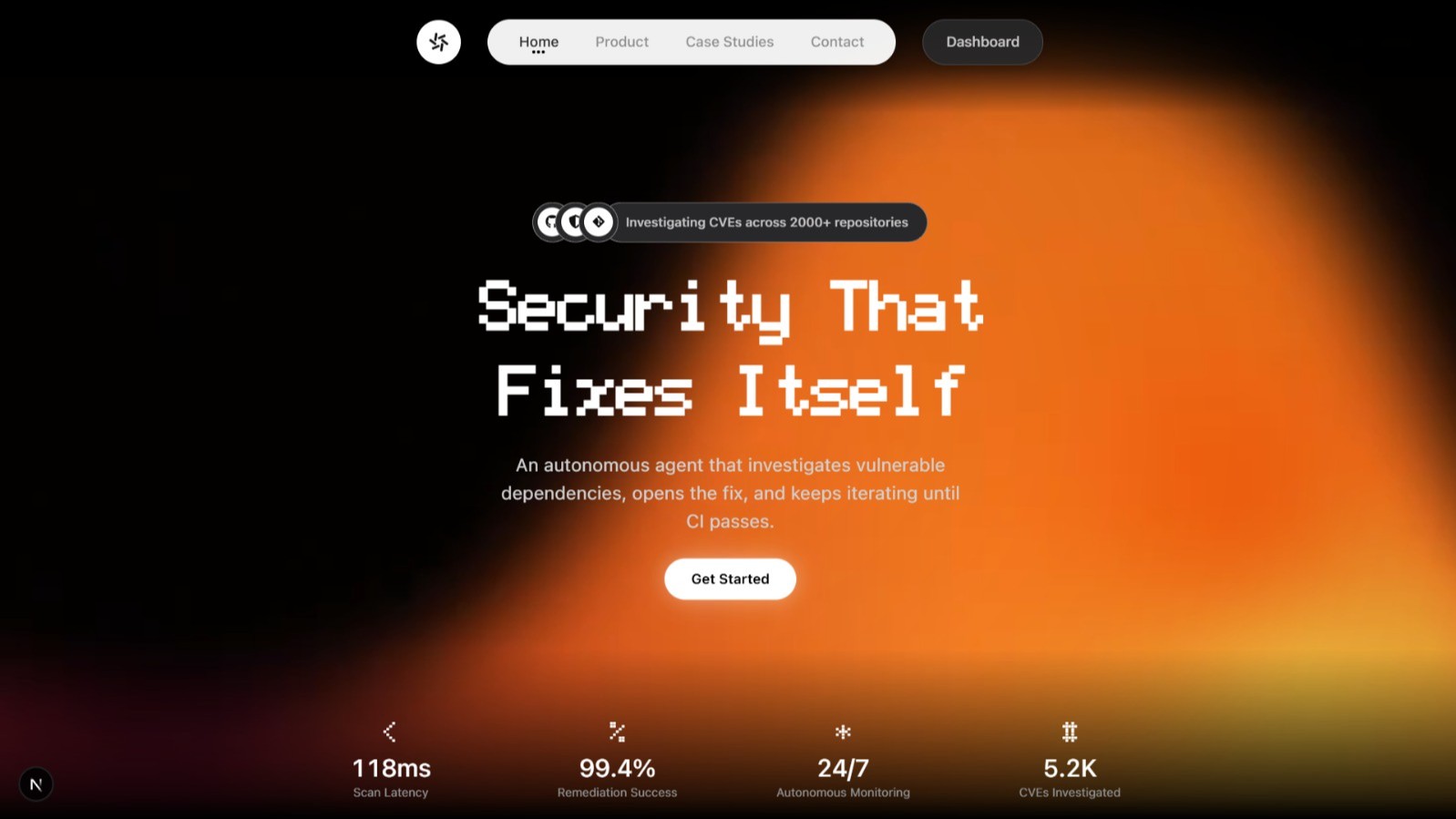
Dephyr An autonomous dependency security and migration agent that detects vulnerable dependency usage, analyzes affected code, performs the migration, adapts breaking API changes, and verifies the result through CI/CD before creating a Pull Request. Overview Modern software projects rely heavily on third-party dependencies. When a vulnerability is discovered in one of those dependencies, identifying the vulnerable package is only the beginning of the problem. Security and development teams still have to determine: Which repositories are actually affected?Is the vulnerable functionality even being used?Where is it being used?Does upgrading the dependency introduce breaking API changes?What source code needs to be modified?Do the changes still build and pass tests?What happens when the first attempted migration breaks CI? This process is often manual, repetitive, and time-consuming. Dephyr approaches dependency security as an autonomous engineering problem rather than just a vulnerability-scanning problem. It combines AI agents, AST-based static analysis, dependency intelligence, GitHub automation, and CI/CD feedback to create a closed-loop remediation system. How Dephyr Works ┌──────────────────────┐ │ CVE / Vulnerability │ │ Detected │ └──────────┬───────────┘ │ ▼ ┌──────────────────────┐ │ AI Agent Investigates│ │ Affected Repos │ └──────────┬───────────┘ │ ▼ ┌──────────────────────┐ │ Rust Analysis │ │ Tree-sitter + AST │ └──────────┬───────────┘ │ ▼ ┌──────────────────────────────┐ │ Find vulnerable dependency │ │ Find imports / API usage │ │ Locate affected call sites │ │ Detect external-input usage │ └──────────────┬───────────────┘ │ ▼ ┌──────────────────────┐ │ Agent Plans Fix │ └──────────┬───────────┘ │ ▼ ┌──────────────────────┐ │ Dependency Migration │ │ + Code Modification │ └──────────┬───────────┘ │ ▼ ┌──────────────────────┐ │ GitHub CI/CD │ └──────────┬───────────┘ │ ┌─────────┴─────────┐ ▼ ▼ PASS FAIL │ │ ▼ ▼ Verified Fix Agent reads CI logs │ │ │ ▼ │ Analyze + Patch │ │ └──────────┬────────┘ ▼ ┌───────────────┐ │ GitHub PR │ └───────────────┘ What Makes Dephyr Different? Traditional vulnerability scanners primarily answer: "Which dependencies are vulnerable?" Dephyr aims to answer the much more useful question: "Where is the vulnerable functionality being used, how does it affect the application, and can we safely remediate it automatically?" Instead of stopping at an alert, Dephyr continues through the entire remediation lifecycle. 1. Dependency Awareness Dephyr identifies vulnerable dependencies within authorized repositories and determines which projects are potentially affected. 2. AST-Based Code Analysis The Rust analysis engine uses Tree-sitter to parse source code and inspect its structure. Rather than relying purely on text matching, it can identify things such as: Dependency importsVulnerable functions or APIsFunction call sitesRelevant source locationsBasic evidence of external input reaching vulnerable functionality This gives the agent structured evidence about what the application is actually doing. 3. Autonomous Migration Once the agent determines that remediation is necessary, it can migrate the dependency to a patched version and modify affected application code when the dependency's API has changed. For example: Old dependency │ ▼ vulnerable_api(data) │ │ migration ▼ patched dependency │ ▼ new_api(data, options) The system can use the code-analysis results to locate affected call sites and adapt them as part of the migration. 4. CI/CD as a Feedback Loop Dephyr does not assume that its first patch is correct. After creating the changes, the repository's CI pipeline becomes a verification mechanism. Patch ↓CI ↓┌───────────────┐│ Build / Tests │└───────┬───────┘ │ ┌───┴───┐ ▼ ▼ PASS FAIL │ │ │ ▼ │ Analyze logs │ │ │ ▼ │ Patch again │ │ │ └──────► CI │ ▼Verified When CI fails, Dephyr can inspect the failure, reason about the required change, modify the code, and run the validation cycle again. This creates an autonomous feedback loop rather than a one-shot code generator. System Architecture Dephyr is composed of four primary components: 🧠 AI Agent The agent acts as the decision-making layer. It is responsible for: Planning investigationsInterpreting static-analysis resultsSelecting remediation strategiesReasoning about API migrationsInterpreting CI failuresDeciding when another iteration is required🐍 Backend The backend acts as the orchestration and integration layer. It connects the agent to: GitHubCVE / vulnerability dataGit repositoriesCI/CDThe Rust analysis engineThe frontend🦀 Rust Analysis Engine The Rust engine is the code-analysis layer. It provides high-performance source-code analysis using: Tree-sitterAST/CST traversalRepository scanningImport detectionFunction-call analysisStructured analysis results It returns evidence to the agent instead of making the final remediation decision itself. ⚛️ Frontend The frontend provides a security-center style interface where users can see: Repository statusVulnerability findingsCode-analysis evidenceAgent activityDependency migrationsCI/CD resultsPull Request statusRemediation progress
Dephyr
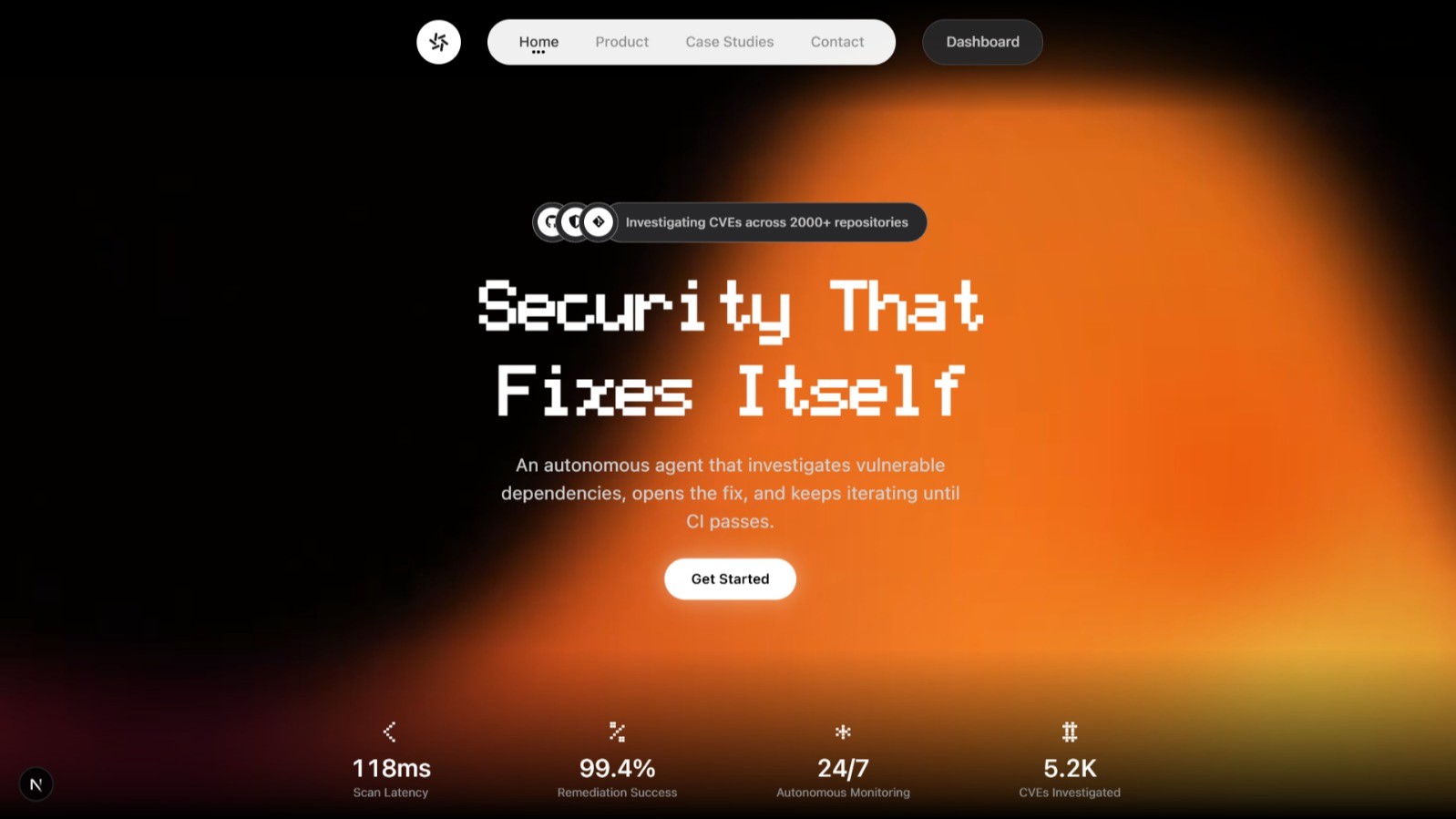
Dephyr An autonomous dependency security and migration agent that detects vulnerable dependency usage, analyzes affected code, performs the migration, adapts breaking API changes, and verifies the result through CI/CD before creating a Pull Request. Overview Modern software projects rely heavily on third-party dependencies. When a vulnerability is discovered in one of those dependencies, identifying the vulnerable package is only the beginning of the problem. Security and development teams still have to determine: Which repositories are actually affected? Is the vulnerable functionality even being used? Where is it being used? Does upgrading the dependency introduce breaking API changes? What source code needs to be modified? Do the changes still build and pass tests? What happens when the first attempted migration breaks CI? This process is often manual, repetitive, and time-consuming. Dephyr approaches dependency security as an autonomous engineering problem rather than just a vulnerability-scanning problem. It combines AI agents, AST-based static analysis, dependency intelligence, GitHub automation, and CI/CD feedback to create a closed-loop remediation system. How Dephyr Works ┌──────────────────────┐ │ CVE / Vulnerability │ │ Detected │ └──────────┬───────────┘ │ ▼ ┌──────────────────────┐ │ AI Agent Investigates│ │ Affected Repos │ └──────────┬───────────┘ │ ▼ ┌──────────────────────┐ │ Rust Analysis │ │ Tree-sitter + AST │ └──────────┬───────────┘ │ ▼ ┌──────────────────────────────┐ │ Find vulnerable dependency │ │ Find imports / API usage │ │ Locate affected call sites │ │ Detect external-input usage │ └──────────────┬───────────────┘ │ ▼ ┌──────────────────────┐ │ Agent Plans Fix │ └──────────┬───────────┘ │ ▼ ┌──────────────────────┐ │ Dependency Migration │ │ + Code Modification │ └──────────┬───────────┘ │ ▼ ┌──────────────────────┐ │ GitHub CI/CD │ └──────────┬───────────┘ │ ┌─────────┴─────────┐ ▼ ▼ PASS FAIL │ │ ▼ ▼ Verified Fix Agent reads CI logs │ │ │ ▼ │ Analyze + Patch │ │ └──────────┬────────┘ ▼ ┌───────────────┐ │ GitHub PR │ └───────────────┘ What Makes Dephyr Different? Traditional vulnerability scanners primarily answer: "Which dependencies are vulnerable?" Dephyr aims to answer the much more useful question: "Where is the vulnerable functionality being used, how does it affect the application, and can we safely remediate it automatically?" Instead of stopping at an alert, Dephyr continues through the entire remediation lifecycle. 1. Dependency Awareness Dephyr identifies vulnerable dependencies within authorized repositories and determines which projects are potentially affected. 2. AST-Based Code Analysis The Rust analysis engine uses Tree-sitter to parse source code and inspect its structure. Rather than relying purely on text matching, it can identify things such as: Dependency imports Vulnerable functions or APIs Function call sites Relevant source locations Basic evidence of external input reaching vulnerable functionality This gives the agent structured evidence about what the application is actually doing. 3. Autonomous Migration Once the agent determines that remediation is necessary, it can migrate the dependency to a patched version and modify affected application code when the dependency's API has changed. For example: Old dependency │ ▼ vulnerable_api(data) │ │ migration ▼ patched dependency │ ▼ new_api(data, options) The system can use the code-analysis results to locate affected call sites and adapt them as part of the migration. 4. CI/CD as a Feedback Loop Dephyr does not assume that its first patch is correct. After creating the changes, the repository's CI pipeline becomes a verification mechanism. Patch ↓ CI ↓ ┌───────────────┐ │ Build / Tests │ └───────┬───────┘ │ ┌───┴───┐ ▼ ▼ PASS FAIL │ │ │ ▼ │ Analyze logs │ │ │ ▼ │ Patch again │ │ │ └──────► CI │ ▼ Verified When CI fails, Dephyr can inspect the failure, reason about the required change, modify the code, and run the validation cycle again. This creates an autonomous feedback loop rather than a one-shot code generator. System Architecture Dephyr is composed of four primary components: 🧠 AI Agent The agent acts as the decision-making layer. It is responsible for: Planning investigations Interpreting static-analysis results Selecting remediation strategies Reasoning about API migrations Interpreting CI failures Deciding when another iteration is required 🐍 Backend The backend acts as the orchestration and integration layer. It connects the agent to: GitHub CVE / vulnerability data Git repositories CI/CD The Rust analysis engine The frontend 🦀 Rust Analysis Engine The Rust engine is the code-analysis layer. It provides high-performance source-code analysis using: Tree-sitter AST/CST traversal Repository scanning Import detection Function-call analysis Structured analysis results It returns evidence to the agent instead of making the final remediation decision itself. ⚛️ Frontend The frontend provides a security-center style interface where users can see: Repository status Vulnerability findings Code-analysis evidence Agent activity Dependency migrations CI/CD results Pull Request status Remediation progress
dephyr
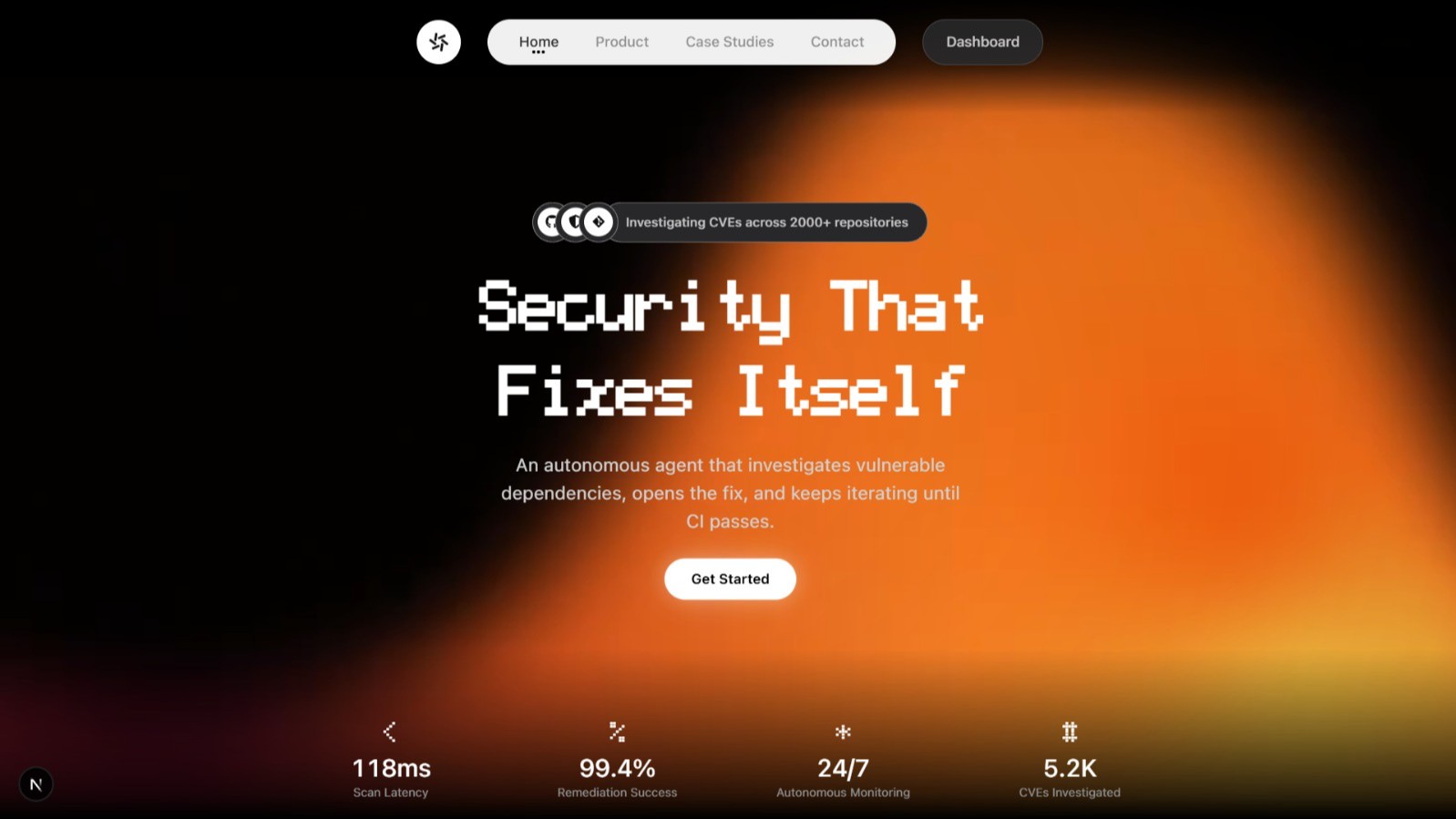
Dephyr An autonomous dependency security and migration agent that detects vulnerable dependency usage, analyzes affected code, performs the migration, adapts breaking API changes, and verifies the result through CI/CD before creating a Pull Request. Overview Modern software projects rely heavily on third-party dependencies. When a vulnerability is discovered in one of those dependencies, identifying the vulnerable package is only the beginning of the problem. Security and development teams still have to determine: Which repositories are actually affected?Is the vulnerable functionality even being used?Where is it being used?Does upgrading the dependency introduce breaking API changes?What source code needs to be modified?Do the changes still build and pass tests?What happens when the first attempted migration breaks CI? This process is often manual, repetitive, and time-consuming. Dephyr approaches dependency security as an autonomous engineering problem rather than just a vulnerability-scanning problem. It combines AI agents, AST-based static analysis, dependency intelligence, GitHub automation, and CI/CD feedback to create a closed-loop remediation system. How Dephyr Works ┌──────────────────────┐ │ CVE / Vulnerability │ │ Detected │ └──────────┬───────────┘ │ ▼ ┌──────────────────────┐ │ AI Agent Investigates│ │ Affected Repos │ └──────────┬───────────┘ │ ▼ ┌──────────────────────┐ │ Rust Analysis │ │ Tree-sitter + AST │ └──────────┬───────────┘ │ ▼ ┌──────────────────────────────┐ │ Find vulnerable dependency │ │ Find imports / API usage │ │ Locate affected call sites │ │ Detect external-input usage │ └──────────────┬───────────────┘ │ ▼ ┌──────────────────────┐ │ Agent Plans Fix │ └──────────┬───────────┘ │ ▼ ┌──────────────────────┐ │ Dependency Migration │ │ + Code Modification │ └──────────┬───────────┘ │ ▼ ┌──────────────────────┐ │ GitHub CI/CD │ └──────────┬───────────┘ │ ┌─────────┴─────────┐ ▼ ▼ PASS FAIL │ │ ▼ ▼ Verified Fix Agent reads CI logs │ │ │ ▼ │ Analyze + Patch │ │ └──────────┬────────┘ ▼ ┌───────────────┐ │ GitHub PR │ └───────────────┘ What Makes Dephyr Different? Traditional vulnerability scanners primarily answer: "Which dependencies are vulnerable?" Dephyr aims to answer the much more useful question: "Where is the vulnerable functionality being used, how does it affect the application, and can we safely remediate it automatically?" Instead of stopping at an alert, Dephyr continues through the entire remediation lifecycle. 1. Dependency Awareness Dephyr identifies vulnerable dependencies within authorized repositories and determines which projects are potentially affected. 2. AST-Based Code Analysis The Rust analysis engine uses Tree-sitter to parse source code and inspect its structure. Rather than relying purely on text matching, it can identify things such as: Dependency importsVulnerable functions or APIsFunction call sitesRelevant source locationsBasic evidence of external input reaching vulnerable functionality This gives the agent structured evidence about what the application is actually doing. 3. Autonomous Migration Once the agent determines that remediation is necessary, it can migrate the dependency to a patched version and modify affected application code when the dependency's API has changed. For example: Old dependency │ ▼ vulnerable_api(data) │ │ migration ▼ patched dependency │ ▼ new_api(data, options) The system can use the code-analysis results to locate affected call sites and adapt them as part of the migration. 4. CI/CD as a Feedback Loop Dephyr does not assume that its first patch is correct. After creating the changes, the repository's CI pipeline becomes a verification mechanism. Patch ↓CI ↓┌───────────────┐│ Build / Tests │└───────┬───────┘ │ ┌───┴───┐ ▼ ▼ PASS FAIL │ │ │ ▼ │ Analyze logs │ │ │ ▼ │ Patch again │ │ │ └──────► CI │ ▼Verified When CI fails, Dephyr can inspect the failure, reason about the required change, modify the code, and run the validation cycle again. This creates an autonomous feedback loop rather than a one-shot code generator. System Architecture Dephyr is composed of four primary components: 🧠 AI Agent The agent acts as the decision-making layer. It is responsible for: Planning investigationsInterpreting static-analysis resultsSelecting remediation strategiesReasoning about API migrationsInterpreting CI failuresDeciding when another iteration is required🐍 Backend The backend acts as the orchestration and integration layer. It connects the agent to: GitHubCVE / vulnerability dataGit repositoriesCI/CDThe Rust analysis engineThe frontend🦀 Rust Analysis Engine The Rust engine is the code-analysis layer. It provides high-performance source-code analysis using: Tree-sitterAST/CST traversalRepository scanningImport detectionFunction-call analysisStructured analysis results It returns evidence to the agent instead of making the final remediation decision itself. ⚛️ Frontend The frontend provides a security-center style interface where users can see: Repository statusVulnerability findingsCode-analysis evidenceAgent activityDependency migrationsCI/CD resultsPull Request statusRemediation progress
Dephyr
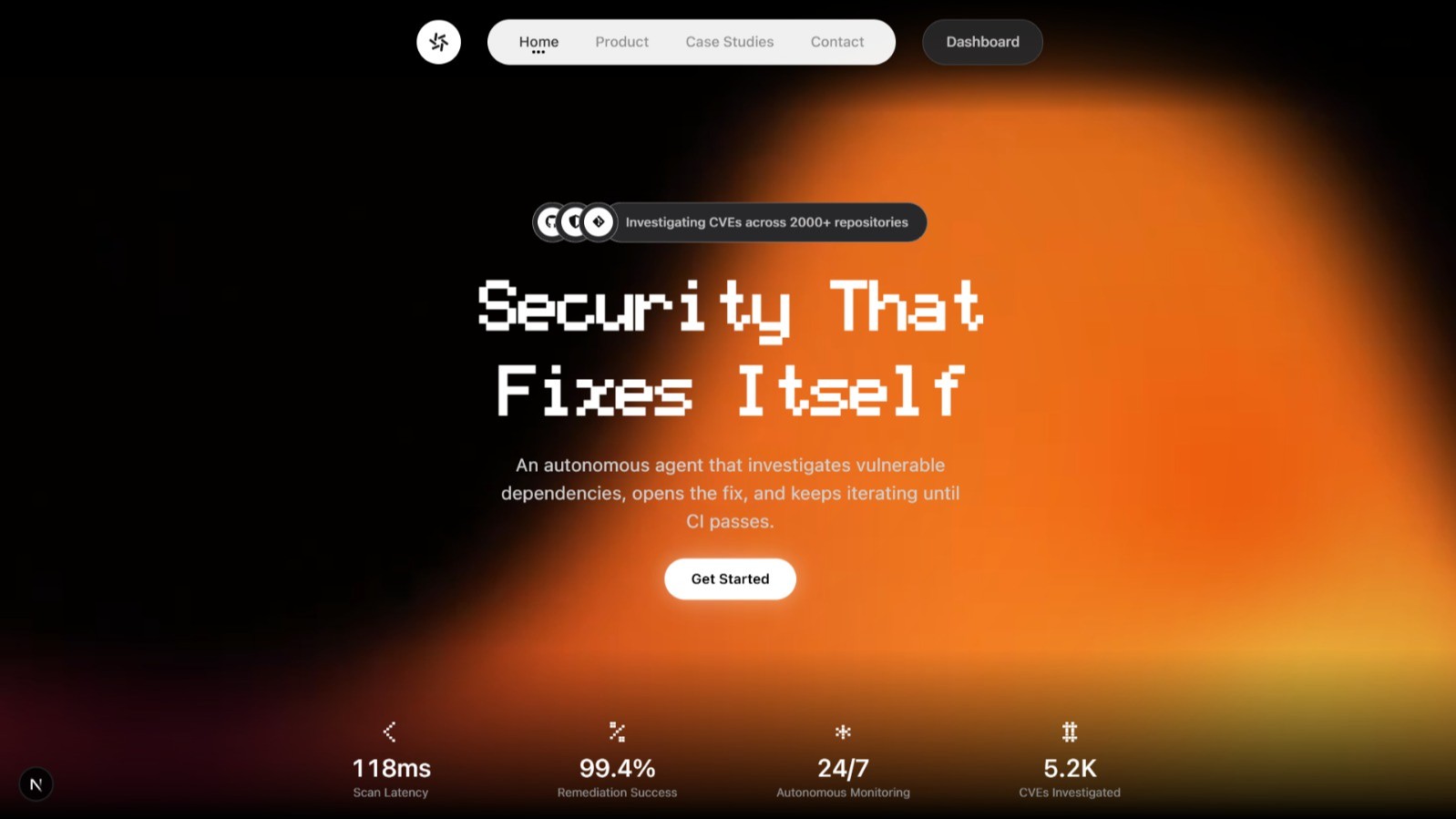
Dephyr An autonomous dependency security and migration agent that detects vulnerable dependency usage, analyzes affected code, performs the migration, adapts breaking API changes, and verifies the result through CI/CD before creating a Pull Request. Overview Modern software projects rely heavily on third-party dependencies. When a vulnerability is discovered in one of those dependencies, identifying the vulnerable package is only the beginning of the problem. Security and development teams still have to determine: Which repositories are actually affected?Is the vulnerable functionality even being used?Where is it being used?Does upgrading the dependency introduce breaking API changes?What source code needs to be modified?Do the changes still build and pass tests?What happens when the first attempted migration breaks CI? This process is often manual, repetitive, and time-consuming. Dephyr approaches dependency security as an autonomous engineering problem rather than just a vulnerability-scanning problem. It combines AI agents, AST-based static analysis, dependency intelligence, GitHub automation, and CI/CD feedback to create a closed-loop remediation system. How Dephyr Works ┌──────────────────────┐ │ CVE / Vulnerability │ │ Detected │ └──────────┬───────────┘ │ ▼ ┌──────────────────────┐ │ AI Agent Investigates│ │ Affected Repos │ └──────────┬───────────┘ │ ▼ ┌──────────────────────┐ │ Rust Analysis │ │ Tree-sitter + AST │ └──────────┬───────────┘ │ ▼ ┌──────────────────────────────┐ │ Find vulnerable dependency │ │ Find imports / API usage │ │ Locate affected call sites │ │ Detect external-input usage │ └──────────────┬───────────────┘ │ ▼ ┌──────────────────────┐ │ Agent Plans Fix │ └──────────┬───────────┘ │ ▼ ┌──────────────────────┐ │ Dependency Migration │ │ + Code Modification │ └──────────┬───────────┘ │ ▼ ┌──────────────────────┐ │ GitHub CI/CD │ └──────────┬───────────┘ │ ┌─────────┴─────────┐ ▼ ▼ PASS FAIL │ │ ▼ ▼ Verified Fix Agent reads CI logs │ │ │ ▼ │ Analyze + Patch │ │ └──────────┬────────┘ ▼ ┌───────────────┐ │ GitHub PR │ └───────────────┘ What Makes Dephyr Different? Traditional vulnerability scanners primarily answer: "Which dependencies are vulnerable?" Dephyr aims to answer the much more useful question: "Where is the vulnerable functionality being used, how does it affect the application, and can we safely remediate it automatically?" Instead of stopping at an alert, Dephyr continues through the entire remediation lifecycle. 1. Dependency Awareness Dephyr identifies vulnerable dependencies within authorized repositories and determines which projects are potentially affected. 2. AST-Based Code Analysis The Rust analysis engine uses Tree-sitter to parse source code and inspect its structure. Rather than relying purely on text matching, it can identify things such as: Dependency importsVulnerable functions or APIsFunction call sitesRelevant source locationsBasic evidence of external input reaching vulnerable functionality This gives the agent structured evidence about what the application is actually doing. 3. Autonomous Migration Once the agent determines that remediation is necessary, it can migrate the dependency to a patched version and modify affected application code when the dependency's API has changed. For example: Old dependency │ ▼ vulnerable_api(data) │ │ migration ▼ patched dependency │ ▼ new_api(data, options) The system can use the code-analysis results to locate affected call sites and adapt them as part of the migration. 4. CI/CD as a Feedback Loop Dephyr does not assume that its first patch is correct. After creating the changes, the repository's CI pipeline becomes a verification mechanism. Patch ↓CI ↓┌───────────────┐│ Build / Tests │└───────┬───────┘ │ ┌───┴───┐ ▼ ▼ PASS FAIL │ │ │ ▼ │ Analyze logs │ │ │ ▼ │ Patch again │ │ │ └──────► CI │ ▼Verified When CI fails, Dephyr can inspect the failure, reason about the required change, modify the code, and run the validation cycle again. This creates an autonomous feedback loop rather than a one-shot code generator. System Architecture Dephyr is composed of four primary components: 🧠 AI Agent The agent acts as the decision-making layer. It is responsible for: Planning investigationsInterpreting static-analysis resultsSelecting remediation strategiesReasoning about API migrationsInterpreting CI failuresDeciding when another iteration is required🐍 Backend The backend acts as the orchestration and integration layer. It connects the agent to: GitHubCVE / vulnerability dataGit repositoriesCI/CDThe Rust analysis engineThe frontend🦀 Rust Analysis Engine The Rust engine is the code-analysis layer. It provides high-performance source-code analysis using: Tree-sitterAST/CST traversalRepository scanningImport detectionFunction-call analysisStructured analysis results It returns evidence to the agent instead of making the final remediation decision itself. ⚛️ Frontend The frontend provides a security-center style interface where users can see: Repository statusVulnerability findingsCode-analysis evidenceAgent activityDependency migrationsCI/CD resultsPull Request statusRemediation progress
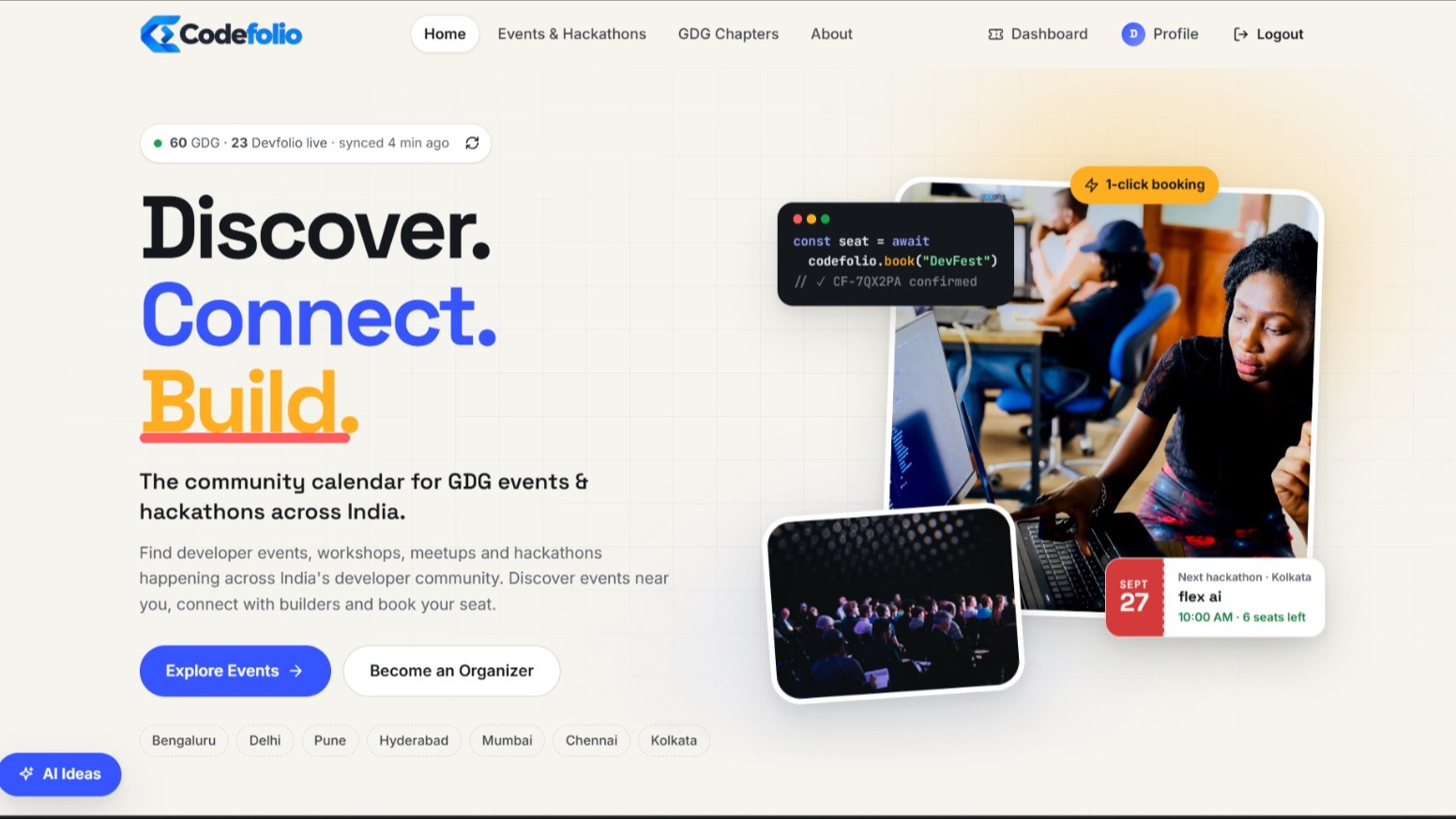
CODEFOLIO
Codefolio Codefolio is an end-to-end hackathon management platform that brings participants, judges, organizers, and the complete hackathon workflow into one place. Key Features Hackathon Discovery & Registration — Browse hackathons, view requirements, and register in one place.AI Hackathon Idea Assistant — Generates personalized project ideas based on the selected hackathon, user skills, interests, team size, and available time. Ideas can be refined and saved.AI Team Matcher— Helps participants find compatible teammates based on skills, interests, experience, and requirements.GitHub Integration — Connect repositories and view relevant development activity directly within the project workflow.Communication Center — Organizers can send targeted announcements to all participants, participants, judges, or specific teams.Participant Chat — Dedicated participant communication with cooldown and anti-spam controls.Judge Application & Verification — Users can apply to become judges, with admin verification before receiving judge access.Judge Dashboard — Centralized project review, scoring, feedback, GitHub information, and project analysis.Weighted Judging System — Organizers can define evaluation criteria and weights, with scores calculated automatically. AI Project Analysis— Provides judges with supporting technical and project context without replacing human evaluation.Score Variance Detection — Highlights unusually large differences between judges' scores for organizer review.Demo Day Management — Presentation scheduling, live timers, Q&A management, and team progression in one system.Organizer Analytics — Tracks registrations, teams, submissions, judging progress, participation, and other hackathon metrics.Role-Based Access — Separate and secure experiences for participants, judges, organizers, and administrators.Responsive UI — Designed to work across desktop, tablet, and mobile devices.
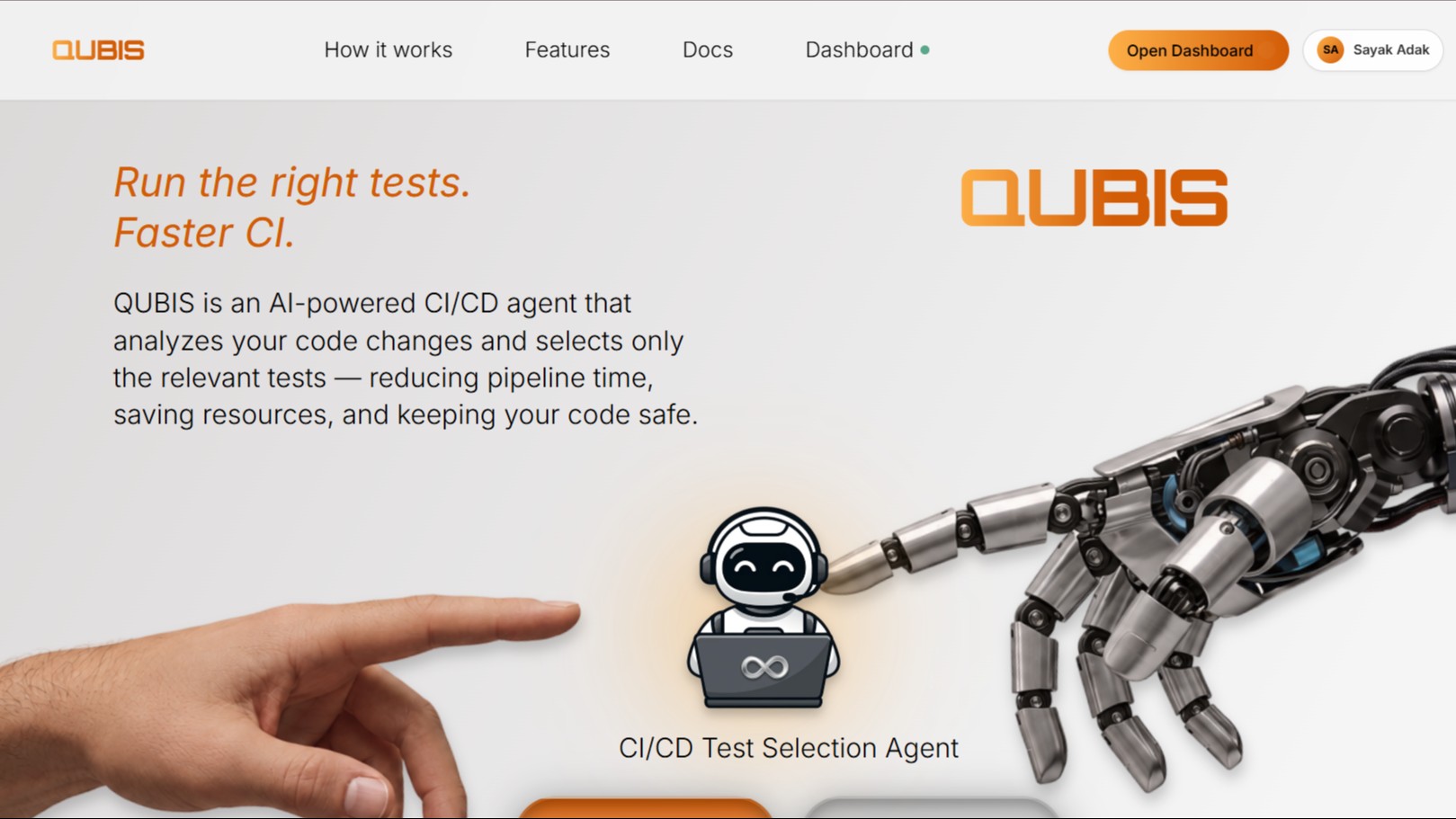
qubis -- team : all iz well
The Qubis is an intelligent software-engineering system that utilizes ReinforcementLearning (RL) to dynamically prioritize automated tests in a Continuous Integration (CI) pipeline. Instead ofrunning an entire test suite sequentially or arbitrarily upon a code change, the agent makes adaptive,sequential decisions to surface failures as quickly as possible.Modern software projects often contain thousands of automated tests. Traditional CI pipelines adopt a "runeverything" approach on every push. For a project with 8,000 tests, a full run might take 40-60 minutes,even if a developer only modified a single file like payment/service.py .This traditional approach introduces significant operational friction:Long Feedback Loops: Developers wait extended periods to discover if a recent change introduceda bug, slowing the development cycle.High Compute Costs: Executing thousands of unrelated tests consumes unnecessary CPU time,memory, and cloud CI minutes.Wasted Computation: Tests completely isolated from the changed code have a near-zero probabilityof detecting a relevant fault, making their immediate execution inefficient.The ultimate success of the system is measured by tangible engineering improvements:Time to First Failure (TTFF): The wall-clock time required to discover the initial fault.Compute Saved: The percentage reduction in CPU time, memory, and cloud costs compared toexecuting the full test suite.Fault Detection Rate (FDR): The percentage of actual, historical failures successfully detected by theprioritized subset. Note: Reducing CI compute is only viable if the FDR remains uncompromisinglyhigh.----- Team : All iz well team member : Souptik Pal , sayak adak , proma roychowdhuri ,urjita paul, tiyasa kamle
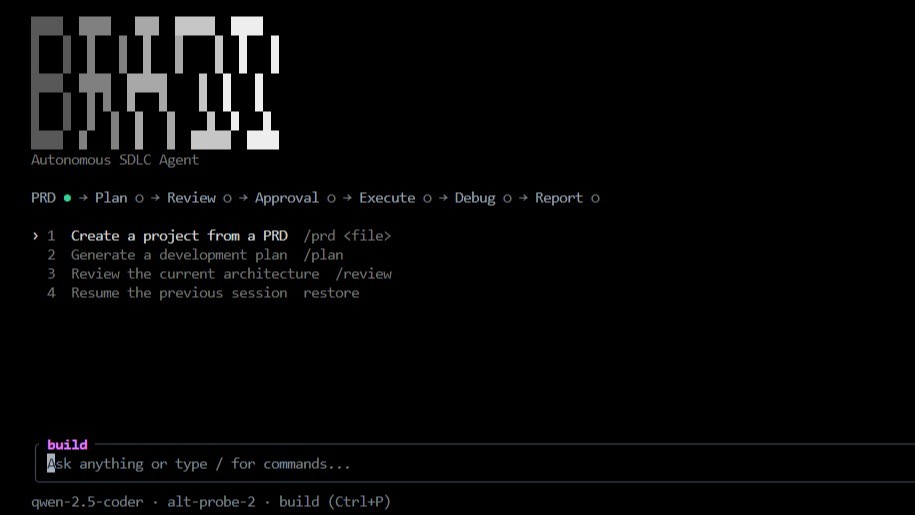
Braid cli
Braid — An Autonomous AI Software Development Agent Braid is a multi-model AI coding agent that automates the entire software development lifecycle, from an initial idea to a tested application. Unlike traditional AI coding assistants that require developers to manually prompt them to plan, review, build, and debug, Braid coordinates these stages automatically through a synchronized, iterative development cycle. Users describe their requirements, and Braid generates a structured plan, independently reviews it, and begins implementation after human approval. It then tests the generated code against the original requirements, identifies shortcomings, and repeats the development cycle using feedback until the desired result is achieved. Braid features an interactive conversational CLI with specialized development modes, Gemini API for AI-powered planning and review, TigerData for storing execution history and displaying detailed report cards and model usage, and ElevenLabs for speech-to-text and text-to-speech interaction. What makes Braid special is its ability to coordinate multiple AI agents as one automated development team, combining continuous improvement, automated testing, project-wide context, and human oversight in a single terminal interface.

YojanaSetu
# YojanaSetu (योजना सेतु)### *AI-Powered Multilingual Citizen Welfare Assistant & Scheme Discovery Portal* --- ## 1. Executive Summary Across central and state administrations in India, more than **3,400+ government welfare programs, subsidies, and financial assistance schemes** exist to uplift underprivileged and developing communities. However, a significant delivery gap persists: millions of eligible citizens—rural farmers, daily-wage laborers, weavers, artisans, gig workers, and low-income families—remain unaware of the benefits they are legally entitled to receive. The primary barriers are:1. **Language Fragmentation:** Government portals and gazettes are frequently published in complex administrative language or English/Hindi only.2. **Bureaucratic Jargon & Digital Illiteracy:** Complex multi-step eligibility criteria and formal terminology overwhelm non-technical citizens.3. **Information Asymmetry:** Citizens do not know which department or ministry operates the scheme relevant to their specific socio-economic profile. **YojanaSetu** ("Bridge to Welfare Schemes") resolves this barrier through a **voice-first, multilingual, accessibility-certified civil assistance platform**. Citizens speak naturally in their native mother tongue (Hindi, Bengali, English, or regional dialects). The platform directly analyzes spoken audio, extracts demographic constraints, queries a curated hybrid database of 3,400+ welfare programs via Retrieval-Augmented Generation (RAG), and provides personalized eligibility scores alongside natural spoken voice guidance in authentic regional accents. --- ## 2. Key Highlights & Value Proposition * **🎙️ Voice-First Civic Interaction:** No typing or navigation hurdles. Citizens simply press the microphone and explain their life situation (e.g., *"I am a small wheat farmer from Madhya Pradesh with 2 acres of land and two school-going daughters"*).* **🧠 Direct Speech-to-Meaning:** Uses **Google Gemini Flash** multimodal processing and **Sarvam AI** (Saaras Indic Speech Engine) to parse colloquial speech into structured demographic parameters (age, state, gender, occupation, caste, annual income).* **🔊 Authentic Vernacular Spoken Responses:** Delivers human-grade audio answers via **Sarvam Bulbul** and **ElevenLabs** (`eleven_multilingual_v2`), with an automatic client-side Web Speech fallback.* **🎯 Precision Eligibility Matching (`/recommendations`):** Cross-matches citizen profiles against the 3,400+ scheme database to deliver percentage-ranked matches (65% to 99% Perfect Match) with clear explanations of why they qualify.* **🔎 Faceted Civic Search (`/search`):** Real-time directory searchable by ministry, state, beneficiary group, and financial support type.* **♿ Built-in WCAG 2.2 AAA Accessibility:** Text scaling up to 200%, dyslexia-friendly typography (OpenDyslexic), line-spacing controls, high-contrast monochrome mode, and dual visual themes (Dark Obsidian vs. Calm Linen & Sage).* **🌐 Native Trilingual Interface:** Seamless instant switching between **English**, **Hindi (हिन्दी)**, and **Bengali (বাংলা)**. --- ## 3. System Architecture & Information Flow ```mermaidflowchart TD subgraph Client ["Frontend (Next.js 16 / React 19 / Tailwind v4)"] A[Citizen Spoken Voice Input] --> B[MediaRecorder / Audio Blob] U[Accessibility Bar & Theme Controller] -. Controls .-> V[UI Canvas & Typography] W[Faceted Search & Recommendations] --> X[Scheme Cards & Modal Viewers] end subgraph BackendGateway ["FastAPI ASGI Server (Python 3.11 / 3.14)"] B --> C[POST /api/voice/process-multimodal] D[Client Profile Data] --> E[POST /api/search/recommendations] end subgraph AIServices ["Multimodal AI & Speech Engine"] C --> F{Speech Engine Routing} F -->|Indic Audio| G[Sarvam AI Saaras STT & Translation] F -->|Multimodal Audio| H[Google Gemini Flash 1.5/2.0] H --> I[Demographic Constraint Extraction] end subgraph RAGCore ["Hybrid Knowledge & Retrieval Pipeline"] I --> J[Scheme Matching Engine] E --> J J --> K[(3,400+ Scheme Relational Store & In-Memory RAG Index)] K --> L[Scored Schemes + Eligibility Explanations] end subgraph SpeechSynthesis ["Spoken Response Synthesis"] L --> M[Structured Vernacular Response Text] M --> N{Audio Synthesis Router} N -->|Indic Native Speakers| O[Sarvam Bulbul TTS] N -->|Global Audio Stream| P[ElevenLabs Multilingual v2] N -->|Offline/Quota Fallback| Q[Web Speech API Client Fallback] end L --> X O --> R[Audio Streaming Response] P --> R R --> S[Citizen Hears Spoken Guidance]``` --- ## 4. Technology Stack ### Frontend Architecture| Layer | Technology | Details & Purpose || :--- | :--- | :--- || **Framework** | **Next.js 16 (App Router)** | High-speed server rendering, modular routes, optimized client hydration || **Library** | **React 19** | Pure JavaScript JSX components without TypeScript compilation overhead || **Styling** | **Tailwind CSS v4** | Native `@theme` tokens, dynamic CSS variables, zero runtime CSS footprint || **Iconography** | **Lucide React** | Consistent, professional civic vector icons (no informal emojis) || **Internationalization** | **i18next / Custom Context** | Multi-locale JSON translation tables (`en`, `hi`, `bn`) || **State Management** | **React Context** | `AuthContext` (Citizen Profiles), `AccessibilityContext` (WCAG settings) | ### Backend Architecture| Layer | Technology | Details & Purpose || :--- | :--- | :--- || **Web Server** | **FastAPI (ASGI)** | High-throughput asynchronous endpoints with Pydantic v2 schemas || **Language Runtime**| **Python 3.11 / 3.14** | Fast asynchronous I/O and data processing pipelines || **Database & ORM** | **PostgreSQL + SQLAlchemy** | Relational schema storage with `psycopg3` and fallback in-memory indexing || **AI Inference** | **Google Gemini Flash** | Direct multimodal audio comprehension and parameter extraction || **Indic Speech** | **Sarvam AI** | Specialized Indian speech-to-text, translation, and Bulbul TTS || **Voice Synthesis**| **ElevenLabs** | Studio-grade multilingual streaming voice output || **Client Transport**| **HTTPX & StreamingResponse**| Low-latency chunked audio streaming directly to the browser | --- ## 5. Functional Module Breakdown ### 5.1 Multimodal Voice Assistant (`/` & `VoiceAssistant.jsx`)* **Live Audio Streaming:** Records microphone input into WebM/WAV containers and transfers raw audio to `/api/voice/process-multimodal`.* **Zero-Hallucination Extraction:** The backend prompts Gemini/Sarvam with strict schema validation to return: - Extracted citizen parameters: State, District, Gender, Age, Occupation, Income Category, Disability Status, Social Category. - Plain-language explanation in the citizen's own language. - Filter criteria to query the scheme dataset.* **Synchronized Audio Playback:** Employs an audio waveform equalizer animation that reacts in real-time as the citizen speaks and as the assistant responds. ### 5.2 Personalized Scheme Recommendations (`/recommendations`)* **Multi-Factor Scoring Engine:** Evaluates demographic suitability against eligibility rules: - **State Level Matching:** Central government schemes (nationwide) + State-specific schemes matching citizen's state. - **Occupational Filtering:** Normalizes citizen occupations (e.g. Farmer, Artisan, Daily Wage Worker, Student, Entrepreneur, Senior Citizen). - **Demographic Exclusions:** Validates gender eligibility (Women-specific programs, Maternity assistance), age thresholds, and caste-based reservation benefits.* **Match Confidence Indicators:** Each scheme card displays an eligibility percentage score (e.g., `96% Match`), matched demographic tags, and bulleted qualifications.* **Citizen Onboarding Tracker:** Offers a 3-step profile completion flow for guests to input their details or explore with preset civic personas. ### 5.3 Scheme Directory & Faceted Search (`/search`)* **Full-Text & Relational Search:** Rapid querying across titles, descriptions, objectives, and ministries.* **Civic Filters:** - Level: All India / Central vs. State-specific. - Category: Agriculture, Healthcare, Education, Social Welfare, Employment, Housing, Financial Inclusion. - Beneficiary Type: Women, Farmers, Students, Senior Citizens, BPL Families, Persons with Disabilities.* **Interactive Scheme Detail Modal:** Presents comprehensive scheme dossiers including key benefits, required documentation checklists, eligibility criteria, and step-by-step application procedures. ### 5.4 Universal Accessibility Engine (WCAG 2.2 AAA Compliant)Integrated directly into the sticky top navigation utility bar:* **Text Resizing Scale:** Seamless dynamic scaling across 4 presets: 100%, 125%, 150%, and 200% without breaking grid layouts.* **Line Height Spacing:** Toggle between Normal, Relaxed, and Loose line-heights for enhanced readability.* **Dyslexia-Friendly Typography:** Instant toggling of the OpenDyslexic font family across all document text.* **High Contrast Mode:** High-visibility monochrome theme with bright contrast borders and zero background glare.* **Anti-Fatigue Dual Visual System:** - **Obsidian Night (Dark Mode):** Deep slate canvas (`#020617` / `#0B1120`) with crisp high-contrast cards. - **Linen & Sage (Light Mode):** Inspired by human editorial paper craft, strictly adhering to: - Primary Accent: `#8B9A6E` (Calm Sage / Olive) - Canvas / Background: `#F7F2EB` (Warm Linen / Ivory Paper) - Cards & Panels: `#EAE2D6` (Warm Oat / Sandstone) - Chips & Secondary Buttons: `#EEEEEE` (Soft Stone) - Text: `#242A1D` (Deep Forest Espresso Charcoal, 11:1+ AAA contrast ratio) --- ## 6. Backend API Specifications | Method | Endpoint | Description || :--- | :--- | :--- || `POST` | `/api/voice/process-multimodal` | Accepts multipart audio blob, transcribes, extracts demographics, and returns matched schemes with spoken audio text || `POST` | `/api/voice/tts` | Generates streaming voice audio (MP3) from text using Sarvam or ElevenLabs || `GET` | `/api/search/schemes` | Returns paginated schemes with query, category, state, and level filters || `POST` | `/api/search/recommendations` | Computes personalized scheme recommendations based on citizen demographic payload || `GET` | `/api/search/schemes/{id}` | Fetches detailed metadata for a single scheme || `POST` | `/api/auth/profile` | Persists or updates citizen demographic attributes in session or database || `GET` | `/api/health` | Service health check returning database status and external API connectivity | --- ## 7. Directory Structure ```YojanaSetu/├── backend/│ ├── app/│ │ ├── core/ # Configuration, security, database connectors│ │ ├── routers/ # FastAPI API routes (voice, search, auth, health)│ │ ├── services/ # AI & RAG engines (gemini.py, sarvam.py, elevenlabs.py, rag.py)│ │ ├── database.py # SQLAlchemy models & database session lifecycle│ │ ├── models.py # Scheme and User database models│ │ ├── schemas.py # Pydantic input/output validation models│ │ └── main.py # FastAPI application entrypoint & middleware│ ├── scripts/ # Dataset ingestion scripts (Kaggle/government data)│ ├── requirements.txt # Python dependencies│ └── run.py # Uvicorn launcher script├── frontend/│ ├── src/│ │ ├── app/│ │ │ ├── about/ # About platform & civic mission page│ │ │ ├── recommendations/ # Personalized eligibility dashboard│ │ │ ├── search/ # Scheme directory & filter search page│ │ │ ├── layout.js # Root layout with accessibility providers│ │ │ ├── page.js # Homepage hero & interactive voice hub│ │ │ └── globals.css # Tailwind v4 theme tokens & WCAG styling│ │ ├── components/│ │ │ ├── AccessibilityDrawer.jsx # Slide-out assistive controls│ │ │ ├── BentoDashboard.jsx # Interactive stats & category grid│ │ │ ├── CitizenLoginModal.jsx # One-click citizen authentication│ │ │ ├── CitizenProfileModal.jsx # Demographic profile editor│ │ │ ├── Footer.jsx # Civic portal footer with government links│ │ │ ├── Navbar.jsx # Sticky civic utility bar & navigation│ │ │ ├── SchemeCard.jsx # Accessible scheme card component│ │ │ ├── SchemeModal.jsx # Full scheme details dialog│ │ │ └── VoiceAssistant.jsx # Audio recording & waveform component│ │ ├── context/│ │ │ ├── AccessibilityContext.jsx# Font scale, contrast, theme state│ │ │ └── AuthContext.jsx # Citizen demographic session state│ │ └── i18n/ # Localization dictionaries (en, hi, bn)│ ├── package.json│ └── next.config.mjs└── PROJECT_DESCRIPTION.md # Detailed project architectural specification``` --- ## 8. Development & Installation Guide ### Prerequisites* **Node.js**: v18.18+ or v20+* **Python**: 3.10+ (Recommended 3.11 or 3.12/3.14)* **API Keys (Optional for local mocks, required for full AI functionality):** - `GEMINI_API_KEY` (Google AI Studio) - `SARVAM_API_KEY` (Sarvam AI Indic Speech) - `ELEVENLABS_API_KEY` (ElevenLabs Voice Platform) ### Backend Setup```bashcd backendpython -m venv venv# On Windows:.\venv\Scripts\activate# On Linux/macOS:source venv/bin/activate pip install -r requirements.txtcp .env.example .env# Edit .env with your API keys if availablepython run.py# Backend runs at http://localhost:8000 (Swagger docs at /docs)``` ### Frontend Setup```bashcd frontendnpm installnpm run dev# Frontend runs at http://localhost:3000``` --- ## 9. Civic Impact & Conclusion **YojanaSetu** transforms government welfare delivery from a passive, text-heavy bureaucracy into an active, empathetic civic bridge. By combining voice-first AI with strict accessibility standards and authentic regional language support, YojanaSetu ensures that government support reaches the citizens who need it most—regardless of their literacy level, language, or physical ability.

Redefining accessibility Limitless learning for specially-abled minds
STUDYFEED AI-Powered Inclusive Learning & Verifiable Credentialing Platform StudyFeed is a privacy-first, AI-powered learning platform designed to make digital education more personalised, accessible, engaging, secure, and verifiable — without labelling students by their learning differences. Traditional educational platforms often treat personalisation and accessibility as separate features, while systems designed for neurodiverse learners can unintentionally create stigma by explicitly categorising students. StudyFeed takes a different approach: every student receives access to the complete learning toolkit, while a private personalisation engine intelligently prioritises the tools most relevant to each learner. 1. Privacy-First Personalisation Students complete a private 10-question learning-preference assessment. Instead of displaying labels such as “ADHD mode” or “Dyslexia mode,” the platform uses the assessment only to personalise the learning experience. The student and administrator never see a condition-based classification. Every learner receives access to tools such as: • Text-to-speech and read-aloud assistance • Step-by-step mathematics support • Personalised study planning • Focus and productivity tools • Calm learning mode • Learning progress and achievement tracking This enables personalisation without stigma. 2. StudyFeed — Intelligent Educational Content Discovery StudyFeed provides students with a centralised educational feed based on their class, subject, and learning requirements. A major engineering challenge was handling external video-platform API limitations. Serverless functions operating on shared cloud infrastructure encountered HTTP 429 quota and rate-limit errors, which could cause the learning feed to become empty. We solved this using a shared six-hour caching architecture. Identical class-and-subject searches are served from the cache rather than repeatedly requesting the external API. A fallback content-fetching mechanism further improves feed resilience when API quotas are unavailable. This reduces unnecessary API requests while improving reliability and continuity of the learning experience. 3. Accessible Text-to-Speech with Synchronized Reading The platform includes an integrated text-to-speech system designed for educational content. During development, browser speech engines occasionally stopped speaking without producing a useful error. We identified speech-queue conflicts and cross-language voice-selection issues as major causes. The system was redesigned with: • Speech queue cancellation and recovery • Controlled resume behaviour • Language-aware voice selection • Delayed speech initialization • Robust utterance management We then extended the system beyond basic TTS by implementing word-level highlighting synchronized with speech boundaries. Students can therefore hear the content while visually following the exact words being spoken. 4. Secure, Server-Authoritative Gamification StudyFeed uses gamification to encourage consistent learning through points, streaks, badges, achievements, and progress tracking. Because browser-side state cannot be trusted, reward generation is completely server-authoritative. The client can report that an activity has been completed, but it cannot directly award points or badges. The server validates the event before modifying the student's reward state. Database-level Row Level Security provides an additional protection layer, creating a defence-in-depth architecture against client-side manipulation and reward fraud. 5. Blockchain-Based Verifiable Credentials StudyFeed introduces a decentralised credentialing layer that connects learning achievements with verifiable digital credentials. When a student completes an eligible learning achievement, the platform can generate a digital certificate and mint the corresponding credential as an NFT on the Solana Devnet. The process can be represented as: Learning Achievement → Certificate → Blockchain Credential → Independent Verification The blockchain implementation presented an additional engineering challenge because the serverless edge environment did not provide the conventional Node.js tooling normally used for blockchain operations. We therefore implemented the required functionality using web-native libraries and seed-derived wallet infrastructure, enabling blockchain interactions within the edge-compatible environment. 6. End-to-End Architecture StudyFeed combines multiple technologies into one integrated learning ecosystem: Personalisation → Content Discovery → Accessibility → Engagement → Secure Rewards → Verifiable Credentials The architecture is built around four core principles: Personalised The learning experience adapts to individual learning preferences. Inclusive Accessibility tools are available to everyone without exposing sensitive labels. Secure Critical rewards and credential operations are controlled through server-side logic and database security. Verifiable Academic achievements can be represented through blockchain-backed credentials. 7. Innovation StudyFeed is not simply another learning management system, video aggregator, accessibility application, or blockchain certificate generator. Its innovation comes from combining AI-driven personalisation, inclusive design, accessibility technology, gamification, resilient content delivery, secure reward architecture, and decentralised credentialing into a single platform. Instead of asking: “Which category does this student belong to?” StudyFeed asks: “What learning experience can help this student learn better?” This shifts educational technology from label-based personalisation toward privacy-preserving, learner-centric adaptation. 8. Expected Impact StudyFeed aims to help students: • Discover relevant educational resources faster • Learn through multiple modalities • Access accessibility tools without stigma • Maintain motivation through meaningful progress systems • Build portable and verifiable academic achievements • Experience a learning environment designed around individual needs Ultimately, StudyFeed aims to make digital education more adaptive, inclusive, secure, and verifiable while keeping the learner at the centre of the system.
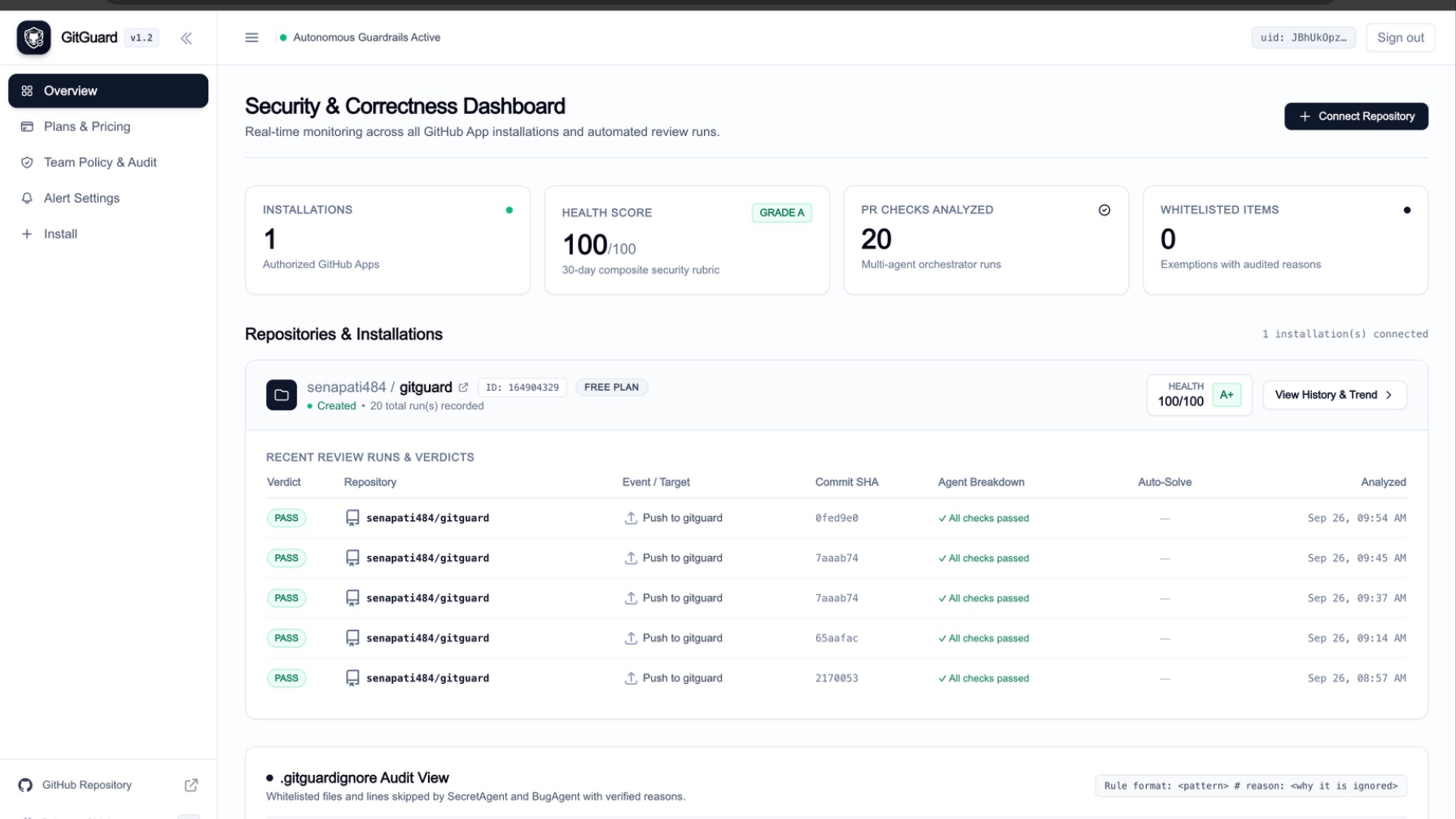
gitguard_anbu
🛡️ GitGuard — Autonomous Multi-Agent GitHub Security & Quality Guardrails 💡 Project Overview GitGuard is an autonomous, multi-agent developer security platform that protects software repositories from leaked secrets, OWASP vulnerabilities, subtle logic defects, and performance regressions. Operating as a native GitHub App, GitGuard inspects every git push and Pull Request with sub-second parallel AI agents, providing automated consensus arbitration and 1-Click Git remediation. 🔌 Seamless Native GitHub App Integration GitGuard installs directly into any personal account or enterprise organization with a single click. It connects to GitHub's event bus via webhooks to automatically monitor pushes, manage commit statuses, and post line-by-line Check Run annotations without interrupting local developer workflows. 📊 Continuous Multi-Agent Repository Health Dashboard Every repository monitored by GitGuard receives a dynamic 30-day health scorecard and composite score (0–100, Pristine A+). Development leads can track pull request pass rates, prevented credentials, security blockers, and individual agent performance trends at a glance. ⚙️ Autonomous Policy Enforcement & Multi-Agent Debate Mode Teams have granular control over how and when guardrails trigger. GitGuard features a groundbreaking Multi-Agent Debate Mode: when specialized agents disagree on severity, an automated cross-examination round evaluates real-world exploitability to eliminate false positives before posting blocking verdicts. 🎛️ Customizable Agent Pipeline & Severity Merge Gates Engineering leaders can customize which agents are mandatory versus optional for their organization: SecretAgent: Zero-tolerance credential interception (OpenAI keys, AWS secrets, GitHub PATs). BugAgent: AST-aware analysis catching unhandled null dereferences and race conditions. SecurityAgent: OWASP Top 10 SAST engine scanning SQLi, SSRF, and command injections. CommitAgent: Enforces Conventional Commits standards and semantic versioning. SEOAgent & HealthAgent: Audits Core Web Vitals and computes repo health rubrics. Teams can configure blocking thresholds (e.g., block only on HIGH/CRITICAL) and set minimum health scores required to pass pull requests. ⚡ Live Commit Stream & 1-Click Auto-Solve Remediation GitGuard doesn't just block broken code—it fixes it. When a vulnerability or bug is detected, the 1-Click Auto-Solve Engine generates the minimal required patch, commits the remediation directly to a new branch, and opens an auto-remediation PR on GitHub, marked with an Auto-Solved badge in the audit ledger. 🏗️ Technical Architecture Multi-Agent Orchestration: LangGraph state graph coordinating parallel specialist agents with consensus arbitration. Ultra-Fast LLM Inference: Groq LPU (openai/gpt-oss-120b, qwen-2.5-coder-32b) delivering sub-second analysis, backed by Google Gemini 1.5 Flash fallback. Zero-Token Fast Path: Clean commits bypass LLMs deterministically, saving API costs and slashing queue latency. Distributed Queue & Ingestion: Next.js 14 App Router, BullMQ, and Upstash Redis for resilient background webhook processing. Persistence & Real-Time Sync: Google Firebase Admin & Firestore for immutable audit logs, team policies, and health rubrics. Instant Alerts: Automated Slack webhook notifications and Nodemailer security dispatches. 🏆 Why GitGuard Stands Out Traditional CI scanners are slow, noisy, and burden developers with manual remediation tickets. GitGuard replaces reactive scanning with an autonomous, proactive shield that catches vulnerabilities at commit time, arbitrates consensus through multi-agent debate, and fixes the code automatically.