semhas-Smart energy and home automation system
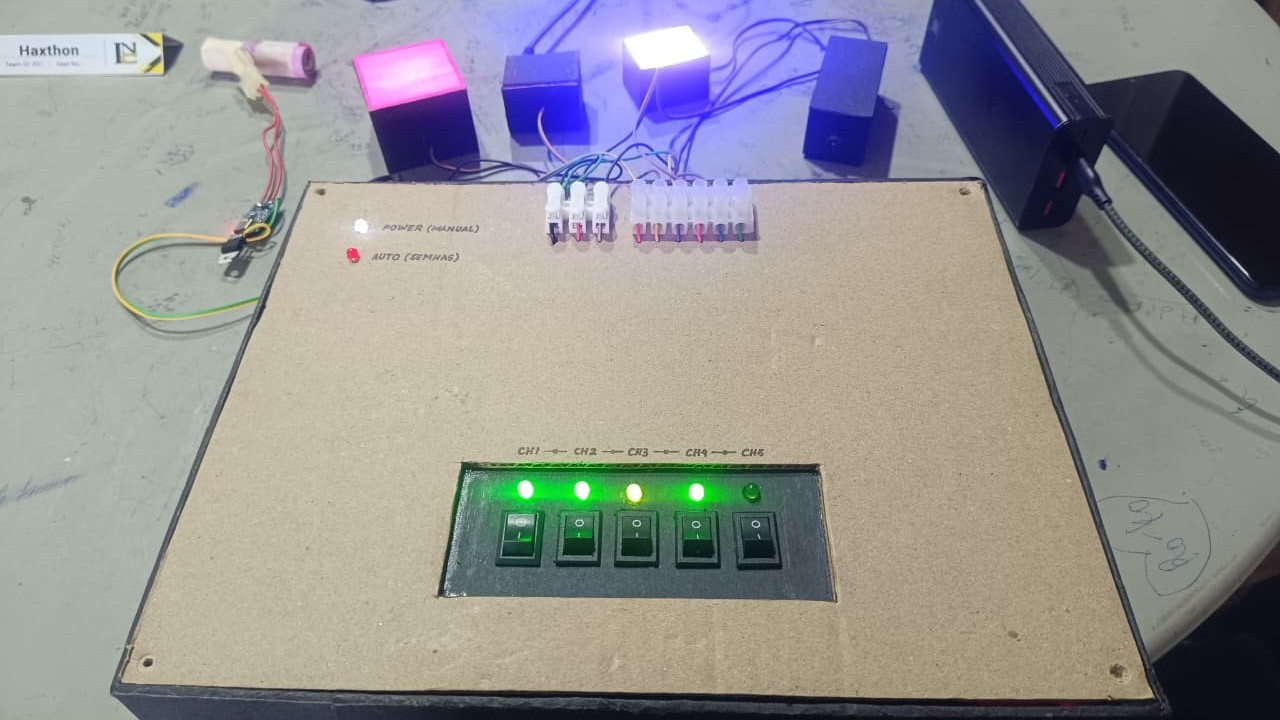
SEMHAS — Smart Energy Management and Home Automation System
SEMHAS (Smart Energy Management and Home Automation System) is an IoT-based smart home and energy management platform designed to combine real-time energy monitoring, appliance automation, remote control, analytics, billing estimation, and voice interaction into a single system.
The system consists of three major layers: smart hardware, cloud infrastructure, and an Android application.
1. Smart Hardware Layer
The hardware is built around an ESP32 microcontroller, which acts as the central controller for the appliance system. SEMHAS supports multiple appliance channels and uses INA219 sensors to measure electrical parameters such as:
- Voltage
- Current
- Power
- Energy consumption
- Appliance-level usage
Relay modules are used for reliable ON/OFF appliance control, while MOSFET-based PWM control is used for loads that require variable speed or intensity control.
The ESP32 communicates with the cloud using Wi-Fi and continuously synchronizes appliance states and energy telemetry.
2. Cloud & Backend Layer
Supabase is used as the cloud backend and database layer. It provides PostgreSQL-based data storage, API access and real-time synchronization between the hardware and Android application.
The cloud layer maintains information such as:
- Appliance states
- Channel information
- Intensity levels
- Energy readings
- Power consumption
- Historical usage
- Billing-related data
This architecture allows the Android application and ESP32 hardware to communicate through the internet without requiring a direct connection between the phone and the ESP32.
3. Android Application
The SEMHAS mobile application is developed using Kotlin and Jetpack Compose with a structured MVVM + Repository architecture.
The application provides a centralized interface for:
- Real-time appliance control
- Individual channel ON/OFF control
- Variable speed/intensity control
- Live voltage, current and power monitoring
- Energy consumption tracking
- Daily, weekly and monthly analytics
- Electricity cost estimation
- Monthly spending-limit alerts
- System/device health information
- Historical energy information
- Voice-based appliance control
4. Remote Access & Connectivity
A key feature of SEMHAS is that the user's phone does not need to be connected to the same Wi-Fi network as the ESP32.
The Android application communicates with the Supabase cloud backend, while the ESP32 independently communicates with the same backend through the internet. Therefore, the phone and the SEMHAS hardware can be on different networks and in different locations.
For example, a user can control or monitor their SEMHAS-connected appliances from another location as long as the Android phone and the SEMHAS hardware both have internet connectivity. This makes the system suitable for remote monitoring and control rather than limiting it to a local Wi-Fi network.
5. Energy Intelligence
SEMHAS converts raw sensor measurements into useful information for the user. Instead of only showing electrical readings, the application provides energy analytics and estimated electricity costs.
Users can analyze consumption across different time periods and identify how much energy their connected appliances are using. The system can also compare the current estimated monthly cost with a user-defined spending limit and provide an alert when the limit is reached.
6. Voice-Based Control
SEMHAS also includes a voice-control interface that allows users to operate appliances using spoken commands. The Android application processes the user's voice input, identifies the requested appliance and action, and sends the corresponding control state through the cloud system to the ESP32.
This creates an end-to-end flow:
Voice Command → Android App → Supabase → ESP32 → Appliance
7. Complete System Workflow
The overall SEMHAS architecture can be represented as:
User → Android App → Supabase → ESP32 → Relay/MOSFET → Appliance
and for monitoring:
Appliance → INA219 → ESP32 → Supabase → Android App → Analytics
This creates a bidirectional IoT system where users can both control physical appliances and receive real-time information about their electrical behavior.
8. Technology Stack
Hardware: ESP32, INA219, Relay Modules, MOSFETs, PWM, I²C
Firmware: Arduino C/C++, ESP32 Wi-Fi, embedded control
Mobile: Kotlin, Android, Jetpack Compose, MVVM, Coroutines, StateFlow
Backend: Supabase, PostgreSQL, REST API, Realtime synchronization
Interaction: Speech Recognition and Voice Control
9. Overall Goal
The goal of SEMHAS is to make home automation more than just remote ON/OFF switching. It combines automation with energy awareness, allowing users to understand their electricity consumption, monitor individual appliances, estimate costs, set spending limits, and control their environment through a single connected platform.
SEMHAS therefore acts as a complete bridge between physical appliances, embedded hardware, cloud infrastructure and modern mobile software, providing a scalable foundation for intelligent energy management and smart-home automation.