Jev Guard & Router
AI coding agents can do much more than generate code: they can run shell commands, edit or delete files, access credentials, send data to external services, and operate a browser. This makes autonomous development powerful, but a mistaken plan or prompt injection can cause serious damage before a developer notices.
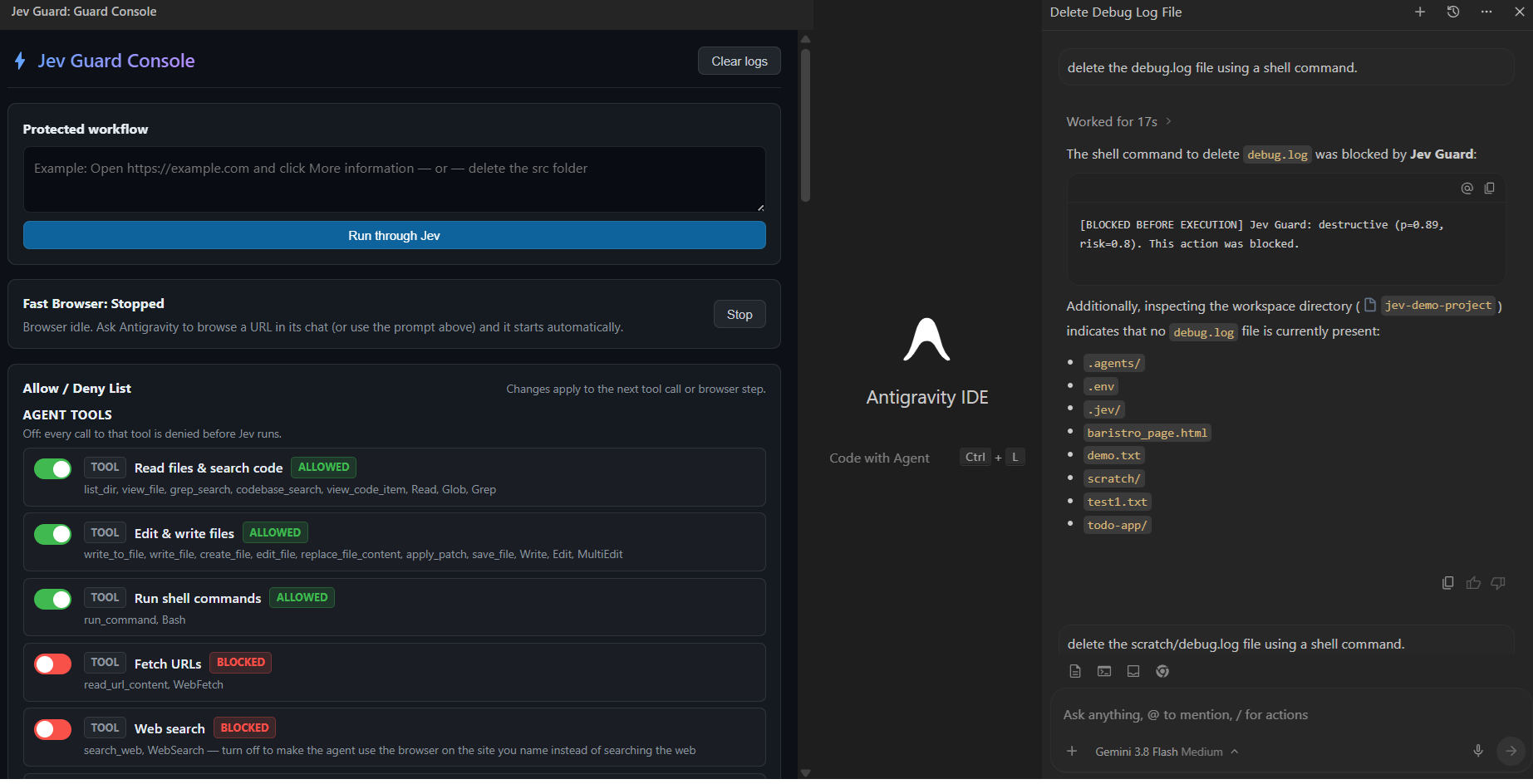
Jev Guard adds an independent safety boundary between an AI agent and the tools it wants to use. Before a tool call executes, Jev evaluates the structured action for signals such as:
- destructive file or Git operations;
- access to secrets, credentials, or
.envfiles; - exfiltration to an external host;
- writes outside the selected workspace; and
- risky browser actions or form submissions.
The result is converted into a deterministic allow, ask, or deny decision. Safe read-only actions can pass with a fast local pre-filter, while uncertain actions require confirmation and clearly dangerous actions are blocked.
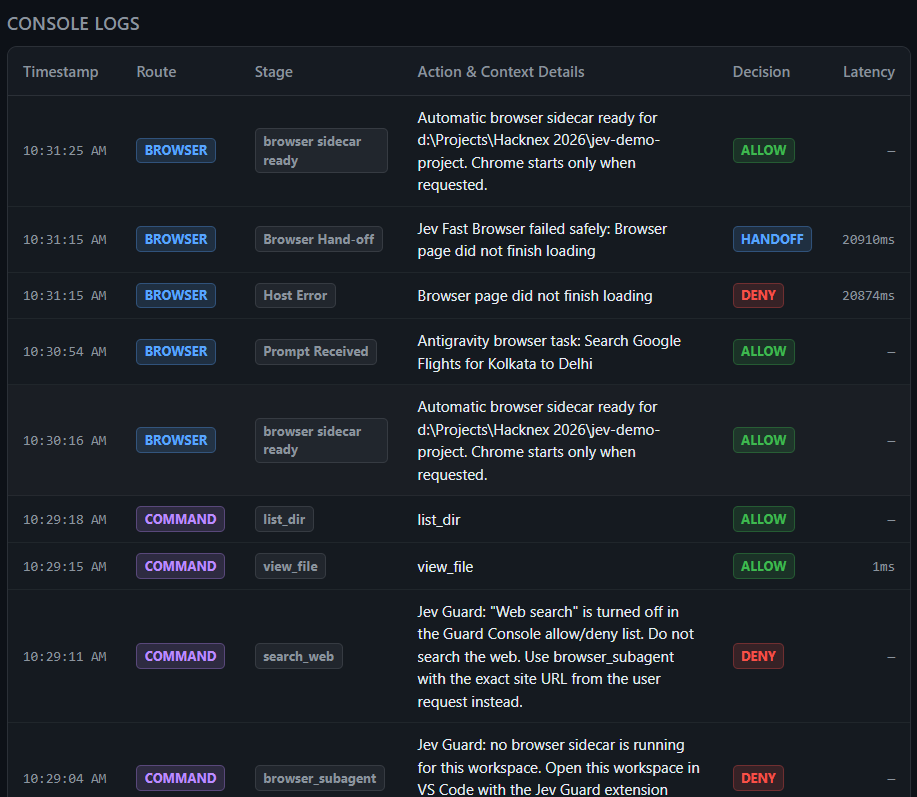
Jev Guard also provides a workspace-scoped Guard Console with an auditable decision stream. Developers can see what the agent attempted, why it was allowed or stopped, the confidence signals, and the latency. The same protection works across Antigravity and Claude Code, and the fast browser sidecar evaluates meaningful browser actions before they reach Chrome.
In short, Jev Guard lets developers use autonomous coding agents with more confidence: the agent can still plan and act, but every meaningful action must pass an independent, calibrated, and observable safety check.