Fury Fly- India's Smallest Drone
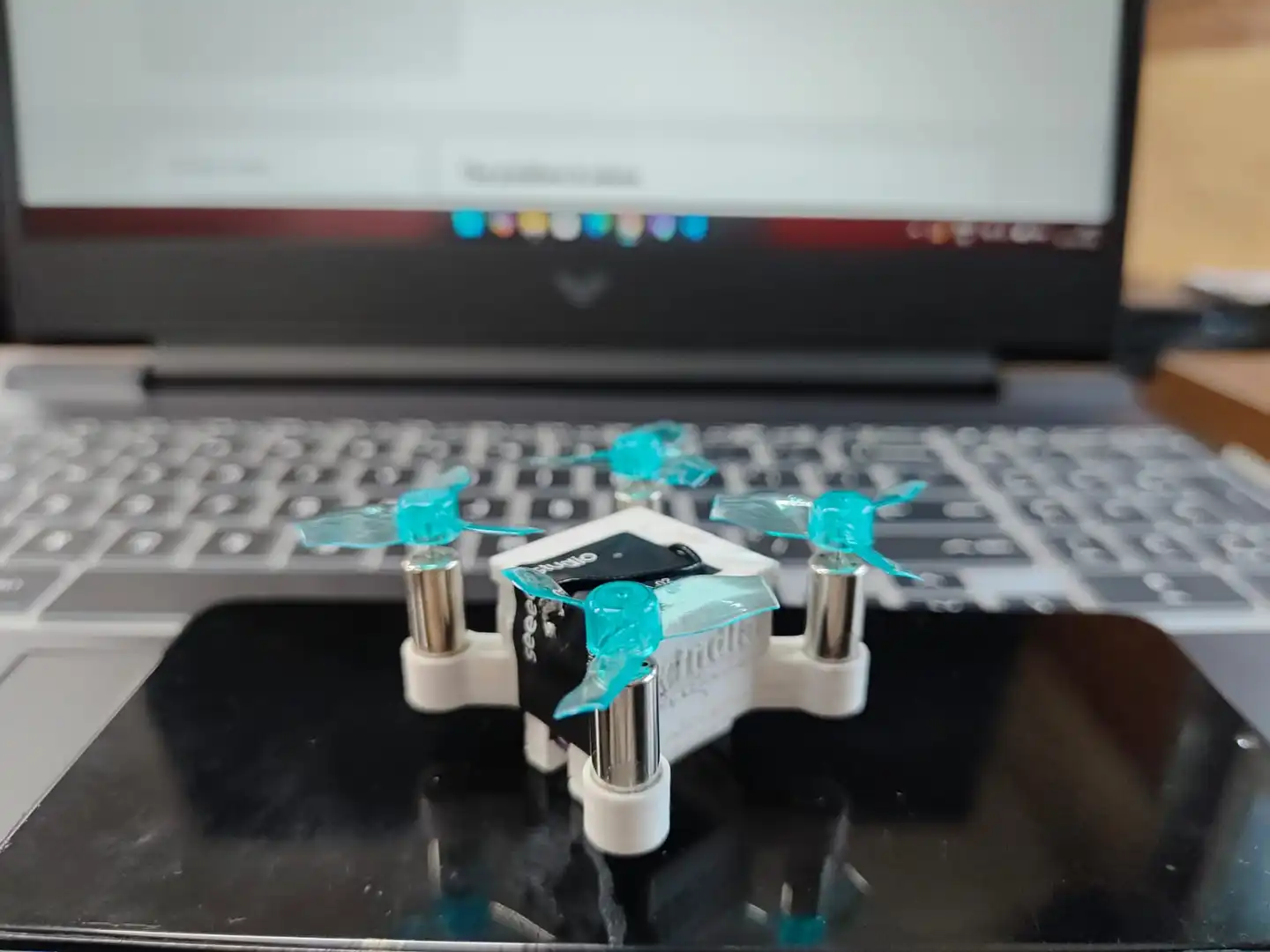
Every engineering project starts with a small idea. Some ideas remain on paper, while others slowly become reality. Fury Fly is one of those ideas that I decided to turn into something real.
Fury Fly is an ambitious project focused on building one of India's smallest custom-designed drones. The drone is still under development, and there's a long journey ahead before its first successful flight. Instead of waiting until everything is finished, I wanted to share the complete development process—the good moments, the failures, and everything in between.
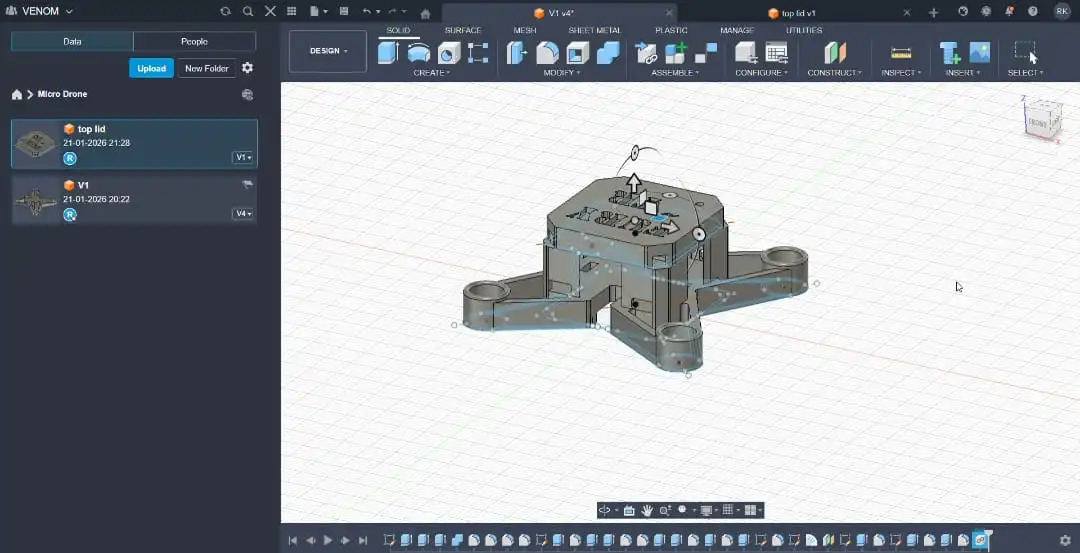
When I first planned Fury Fly, I thought making a tiny drone would actually be easier than building a larger one. I couldn't have been more wrong.
The smaller the drone becomes, the harder every decision gets. Space becomes extremely limited, weight becomes critical, and even a few extra grams can affect flight performance. Every wire, screw, connector, and electronic component has to be carefully selected.
I've spent countless hours researching motors, batteries, flight controllers, ESCs, receivers, and propellers. Most of my time wasn't spent building—it was spent learning.
One of the biggest challenges has been designing a frame that is both lightweight and strong enough to survive crashes. Every redesign teaches me something new about engineering and manufacturing.
Like every student project, things haven't always gone according to plan. Components arrived late, some parts were incompatible, and a few designs looked perfect on the computer but failed in real life. Although frustrating at first, these setbacks have become some of the best learning experiences.
For me, Fury Fly is much more than just another drone project.
It's helping me understand embedded systems, PCB layouts, aerodynamics, battery management, wireless communication, 3D design, firmware configuration, and mechanical design—all in one project.
I'm documenting the entire process so other students can learn from both my successes and my mistakes.
Planned Specifications
Note: These specifications are the current design targets and may change as development continues.
| Specification | Planned Value |
|---|---|
| Project Name | Fury Fly |
| Category | Nano Drone |
| Country | India |
| Status | Under Development |
| Drone Type | Custom Built |
| Flight Controller | ESP S3 XIAO |
| Frame Material | Carbon Fiber / 3D Printed Prototype |
| Propeller Size | 31–40 mm (Estimated) |
| Motor Type | Coreless / Brushless (Under Testing) |
| Battery | 1S Li-Po |
| Estimated Flight Time | 4–7 Minutes |
| Control Range | 50–100 m (Target) |
| Camera | No (Initial Prototype) |
| Weight Goal | Under 30 g |
| Assembly | DIY |
Planned Components
| Component | Purpose |
|---|---|
| Flight Controller | Controls drone stability |
| Motors | Generate lift |
| Propellers | Produce thrust |
| Li-Po Battery | Power supply |
| Receiver | Wireless communication |
| Frame | Holds all components |
| Charger | Battery charging |
| Transmitter | Manual control |
| Screws & Mounts | Assembly |
| Connectors & Wiring | Electrical connection |
Estimated Budget
| Item | Estimated Cost (₹) |
|---|---|
| Flight Controller | 1,100 |
| Motors (4x) | 900 |
| Propellers | 150 |
| Li-Po Battery | 500 |
| Receiver | 800 |
| Radio Transmitter | 4,000 |
| Frame Material | 700 |
| Charger | 700 |
| Connectors & Wires | 250 |
| Miscellaneous | 1,200 |
| Estimated Total | ₹10,300 |
What I've Learned So Far
One thing I've learned during this project is that engineering isn't just about assembling parts together. It's about solving problems that you never expected to face. Sometimes you spend hours trying to fix something that turns out to be a loose connector. Sometimes an entire design has to be changed because one component is just a few millimeters too large.
Those moments can be frustrating, but they're also where most of the learning happens. Every redesign makes the project better. Every mistake teaches something new. And every small milestone makes the final goal feel a little closer.
What's Next?
The next phase of Fury Fly focuses on completing the frame design, integrating all electronic components, configuring the flight controller, and preparing for the first flight tests.
There will almost certainly be crashes, broken propellers, firmware issues, and several redesigns before the drone flies the way I imagine.

But that's exactly what makes building something from scratch so rewarding. This isn't just about creating a tiny drone. It's about learning, improving, and showing that student projects can become something meaningful with enough patience and dedication.
Thank you to everyone following the Fury Fly journey. More updates, testing videos, design improvements, and development logs will be shared as the project continues to evolve.
The first flight may still be ahead—but every small step is bringing Fury Fly closer to the sky.