Arachnid Research Companion (ARC)

The Spark: What Inspired It
The inspiration for ARC (Arachnid Research Companion) stems from a simple reality: nature navigates rugged terrain far better than wheels or tracks. While traditional rovers get bogged down by loose soil, dense undergrowth, or jagged rocks, arachnids traverse these obstacles effortlessly due to their low center of gravity and multi-legged stability. We set out to build a discrete, highly adaptive companion capable of entering fragile or inhospitable ecosystems to collect crucial environmental data without disrupting local wildlife or getting stuck in the mud.
The Build: How It Was Created
Bringing a bio-inspired robot to life meant bridging complex kinematics with edge intelligence. The project was executed across three core dimensions:
-
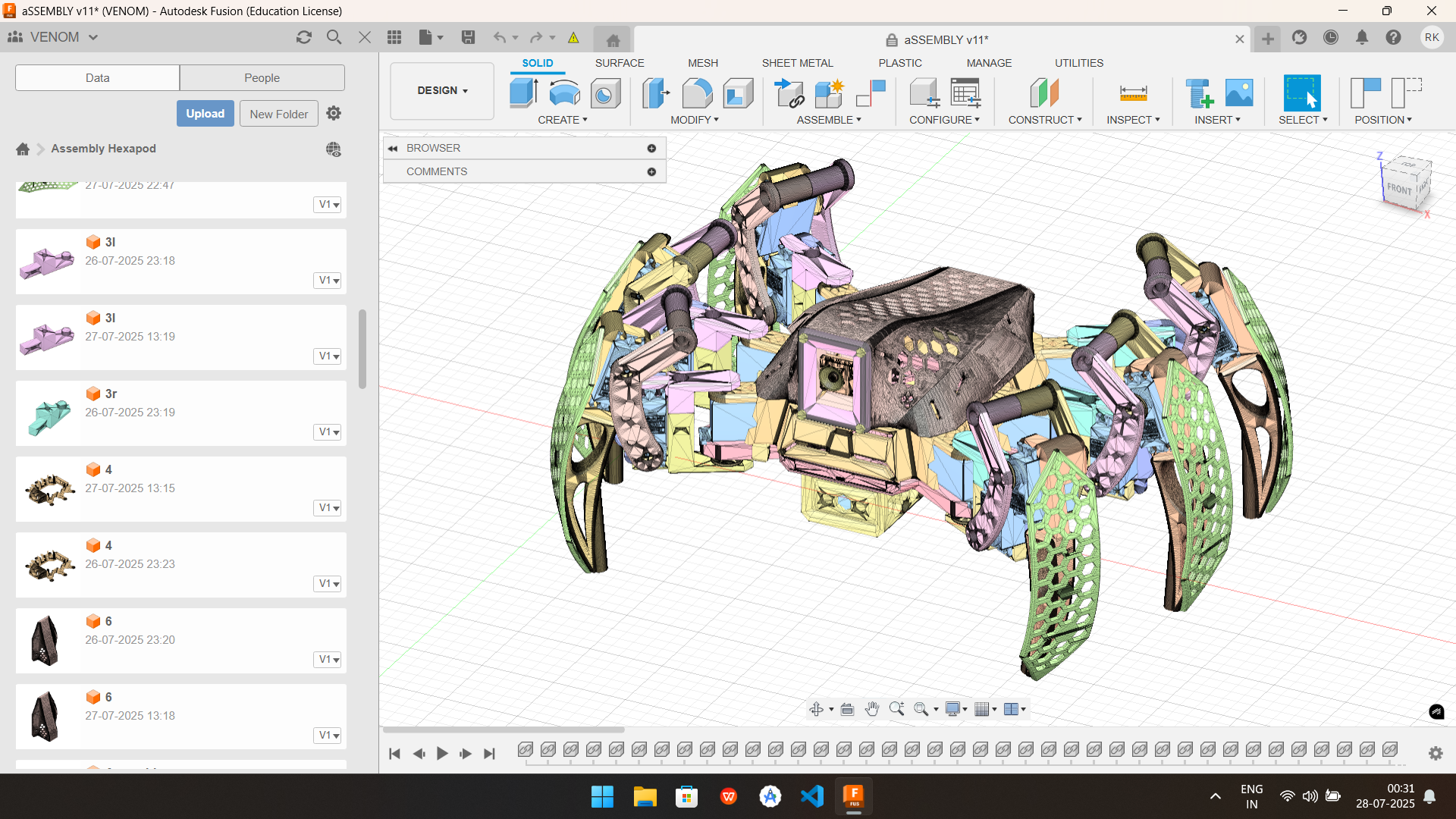
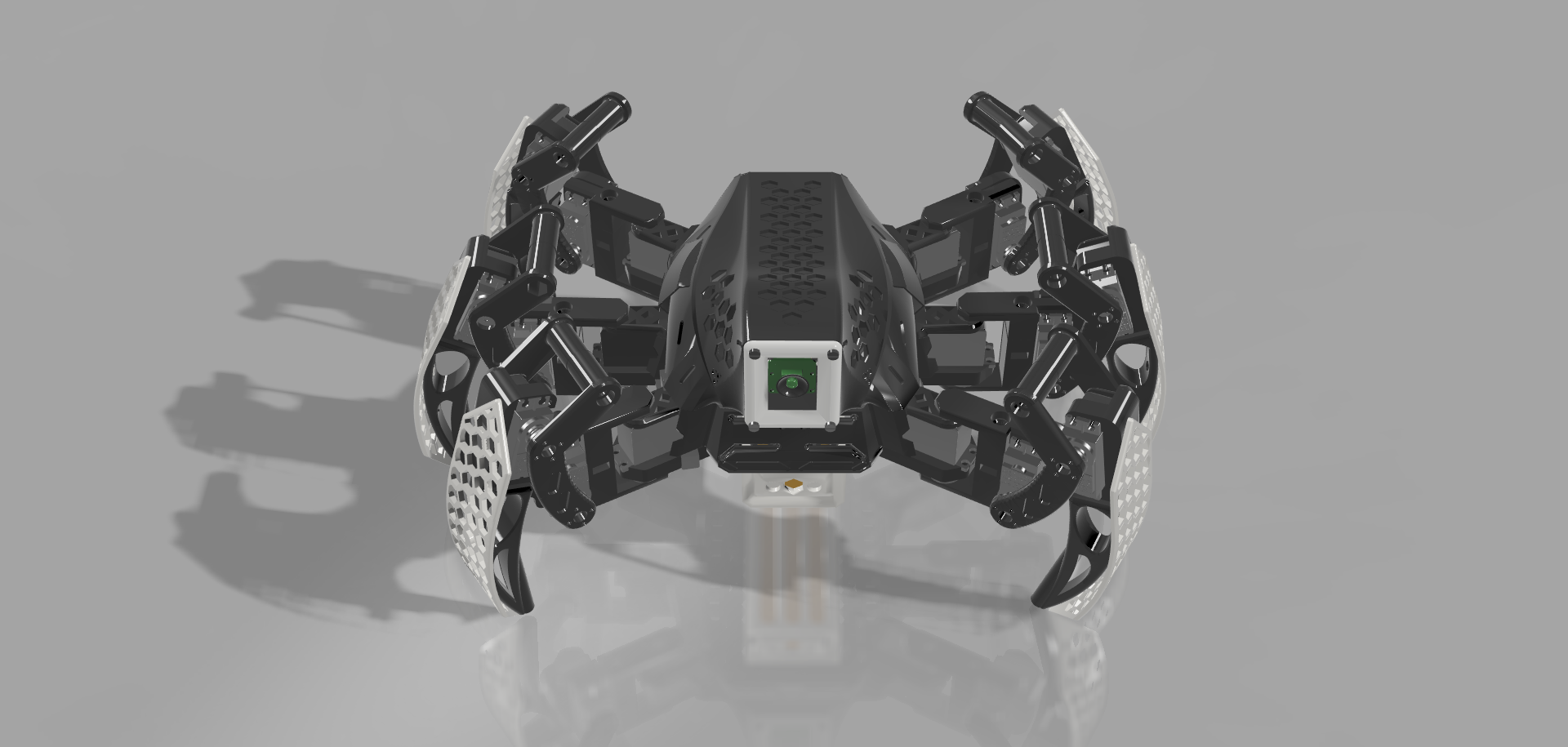
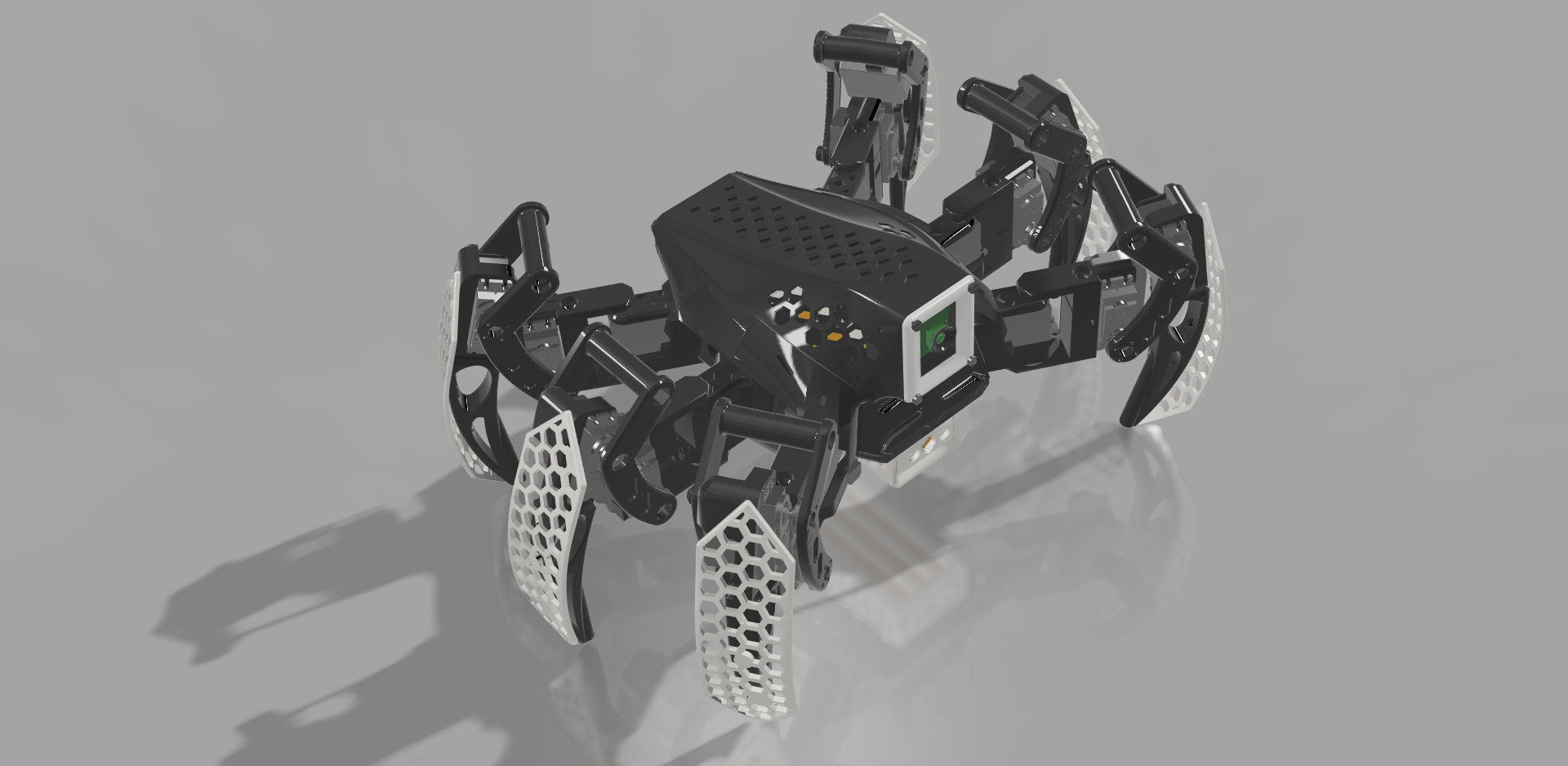
Mechanical Design: We engineered a lightweight, modular multi-legged chassis. Each limb features multiple degrees of freedom, allowing for articulate, dynamic movement. The physical structure was designed to maintain a low profile, distributing weight evenly across all contact points.
-
Electronics & Sensing: At the heart of ARC is an onboard edge computing board integrated with an environmental sensor suite. This allows the companion to monitor atmospheric data, gas levels, temperature, and terrain anomalies in real time.
-
Locomotion Control: The toughest hurdle was the gait logic. Instead of rigid programming, we developed adaptive locomotion algorithms. If the terrain suddenly shifts, the system calculates joint angles in real time to ensure continuous balance and seamless obstacle traversal.
The Lessons: What Was Learned
Every prototype brought critical technical insights that shifted our engineering perspective:
-
Dynamic Power Demands: Multi-jointed locomotion is incredibly power-hungry. We learned that mechanical design is only half the battle; writing aggressive power-management scripts—such as putting sensors into low-power states during movement and throttling torque when stationary—is vital for survival in the field.
-
Simulation vs. Dirt: A gait pattern that looks mathematically flawless in a simulator can fail instantly when encountering real-world friction, loose pebbles, or slippery inclines. Physical testing and rapid, on-site calibration are irreplaceable.
-
The Beauty of Redundancy: The most rewarding discovery was the inherent resilience of a multi-legged system. We learned to program algorithmic redundancy: if a limb gets damaged or trapped, the locomotion model dynamically recalculates the gait, allowing ARC to limp forward and complete its mission.
The Horizon
ARC proved that bio-inspired robotics is the key to unlocking hard-to-reach environments. The project taught us to embrace adaptability over rigid structural strength, laying a foundational blueprint for the future of autonomous, low-impact ecological research.